Listeners:
Top listeners:
-
 play_arrow



Greece Faces Report On Deadliest Train Crash As Protests Start

By Stefan J. Bos, Chief International Correspondent Worthy News
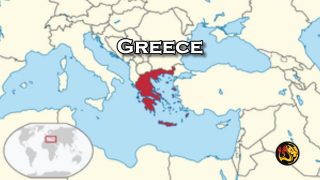
ATHENS (Worthy News) – Massive protests were underway in Greece on Friday on the second adversary of the nation’s deadliest train crash after a report blamed human error, outdated infrastructure, and significant systemic failures for the head-on collision killing 57 people.
Evdokia Tsagli told reporters she remembers laughing moments before her train wagon spun through the air. The ordeal lasted seven seconds. For Tsagli, “It was like eternity.” “I think I said over 100 times to myself, ‘When is it gonna stop?'” she recalled.
On February 28, 2023, her carriage in a Greek passenger train landed on top of the dining car ahead, flames consuming the wreckage.
The train, carrying hundreds — many of them university students — collided head-on with a freight train near Tempe, 375 kilometers (235 miles) north of Athens, the capital.
An independent 178-page report written by an independent investigative committee found that a station master’s routing mistake sent the passenger train onto the same track as an oncoming freight train.
The collision, which killed 46 passengers and 11 staff, including both train drivers, left many survivors with physical and mental wounds that will take long to heal.
Investigators also highlighted poor training, staff shortages, and a deteriorating railway system that lacked automated safety controls, noting a chronic lack of public investment during the 2010-18 financial crisis.
That did little to prevent protests on Friday, with thousands expected to remember the victims and pressure authorities to improve infrastructure.
Copyright 1999-2026 Worthy News. This article was originally published on Worthy News and was reproduced with permission.
Latest News from Worthy News

A Dutch community remained in shock Saturday after a 13-year-old girl was detained following the discovery of her parents’ bodies in their home in the northern Netherlands.
Bolivian President Rodrigo Paz declared a 90-day state of emergency Saturday, empowering the military to clear road blockades after nearly 50 days of anti-government protests that have included widespread road blockades, leaving at least 14 people dead and crippling the nation’s economy.
A powerful thunderstorm system sweeping across Western Europe killed at least one person in the Netherlands, injured several others in Belgium and Germany, and caused widespread damage as nearly 190,000 lightning flashes illuminated the skies, authorities said Saturday.

Israeli strikes killed at least 10 people in Lebanon on Saturday despite a ceasefire that took effect hours earlier, officials said, with Israel claiming it was responding to attacks by the Iran-backed Hezbollah group.

Israel and Iran-backed Hezbollah have agreed to a ceasefire that was to begin Friday afternoon, Worthy News learned.

At least 10 people, including four children, were injured in a Russian strike on Ukraine’s northeastern Kharkiv region, Ukrainian authorities said Friday. In southern Ukraine, the State Emergency Service reported that one person was killed and four others were injured in a separate Russian attack on the Odesa region.

President Donald Trump signed the temporary peace deal with Iran ahead of schedule Wednesday at the Palace of Versailles in France, kicking off negotiations over a final nuclear deal.