Listeners:
Top listeners:
-
 play_arrow



Congress Introduces Resolution Condemning Christian Persecution in Muslim-Majority Nations

by Worthy News Washington D.C. Bureau Staff
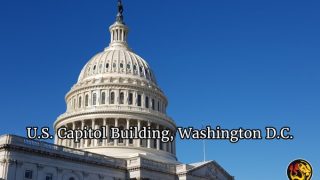
(Worthy News) – A group of Republican lawmakers introduced a sweeping resolution in the U.S. House of Representatives condemning the systemic persecution of Christians across Muslim-majority countries and calling on President Donald Trump to make the issue a top priority in American foreign policy.
H. Res. 594, led by Rep. Riley Moore (R-W.Va.) and co-sponsored by Reps. Steube, Guest, Grothman, McDowell, Gill, Luna, and Harrigan, was formally introduced on July 17 and referred to the House Committee on Foreign Affairs. A companion resolution was introduced in the Senate by Sen. Josh Hawley (R-Mo.).
The resolution cites findings from Open Doors’ 2025 World Watch List, which reports that over 380 million Christians worldwide face high levels of persecution and discrimination—many of them in Muslim-majority nations. “We cannot sit on the sidelines,” said Hawley on the Senate floor. “Christians are being tortured, arrested, driven from their homes, and killed—simply for declaring Jesus Christ as Lord.”
Specific examples outlined in the resolution span 23 countries. In Nigeria alone, the resolution highlights that more Christians are killed each year than in all other nations combined. A Palm Sunday massacre in 2025 claimed at least 50 lives, while a more recent June attack in Benue State left over 200 Christians dead after militants reportedly shouted “Allahu Akbar” while slaughtering displaced believers.
“More than 50,000 Christians have been martyred and over 5 million displaced in Nigeria in recent years,” Rep. Moore said. “These are not isolated incidents—they are part of a horrific trend of targeted violence.”
The resolution documents a litany of abuses: forced conversions, church demolitions, kidnapping of Christian girls in Egypt and Pakistan, imprisonment of pastors in Algeria and Iran, systematic harassment in Gaza, and the torture and underground exile of believers in Afghanistan and Yemen. In Syria, a jihadist recently opened fire during a divine liturgy in Damascus, killing 30 worshipers and injuring dozens more.
Moore also pointed to the cases of Yahaya Sharif-Aminu, a Nigerian gospel musician sentenced under blasphemy laws, and Rhoda Jatau, imprisoned for criticizing the lynching of a Christian student. He blamed past U.S. foreign policy failures—including the Iraq War—for exacerbating conditions for Christians in the Middle East.
The resolution calls for President Trump to integrate the protection of persecuted Christians into trade and security talks, peace negotiations, and diplomatic engagements, particularly in Muslim-majority regions. “Our country was founded on religious liberty,” said Hawley. “That must include speaking out for believers suffering around the world.”
Religious freedom organizations applauded the move. Kelsey Zorzi of ADF International called it “a long-overdue recognition of a global crisis.” Sean Nelson, legal counsel for ADF, added, “It is significant that the resolution clearly identifies what so many won’t: Christians are often singled out simply for who they are.”
Rep. Grothman urged the Church to raise its voice as well. “When other groups face discrimination, they’re not afraid to tell the world. Christians should have that same freedom—everywhere.”
The resolution has drawn support from a wide coalition of advocacy groups, including In Defense of Christians, CatholicVote, Christians Engaged, Global Christian Relief, Save the Persecuted Christians, and Advancing American Freedom. Sponsors hope the resolution will spark both congressional and executive action to confront what many are calling a modern-day genocide against Christians.
“Now is the time for moral clarity,” Moore declared. “We must speak with one voice: the persecution of Christians will not be ignored.”
Copyright 1999-2026 Worthy News. This article was originally published on Worthy News and was reproduced with permission.
Latest News from Worthy News
European policymakers, church leaders and representatives of Syria’s Christian communities have urged the country’s transitional authorities to protect minority Christians amid concerns over the future of believers in the war-torn Middle East nation.

A reported Houthi attack has struck Saudi Arabia’s strategically vital East-West oil pipeline, the massive cross-country system designed to keep Saudi crude flowing even when the Strait of Hormuz is threatened or closed.

Spanish-Moroccan relations, already strained over migration, faced more pressure Friday after Spain’s lower house of parliament approved legislation that would grant Spanish citizenship to tens of thousands of Sahrawis born when Madrid administered Western Sahara.

Russia launched fresh air attacks on Ukraine early Friday after NATO reportedly confronted Russian vessels trying to sabotage undersea cables, highlighting concerns that Moscow is attempting to extend the war by targeting Europe’s critical infrastructure.
Iran-backed Houthi forces seized Yemen’s strategic Red Sea port city of Mocha, raising fears for global shipping as escalating Middle East tensions pushed oil prices above $100 a barrel.

The United States and its allies are commemorating the 25th anniversary of the worst terror attacks on American soil, which had worldwide implications ranging from wars to increased surveillance.
Several impoverished Christians have died across Pakistan in recent days amid what advocates describe as a pattern of violence, discrimination and hardship potentially threatening the Christian community throughout the predominantly Muslim nation, Christian sources told Worthy News.