Listeners:
Top listeners:
-
 play_arrow



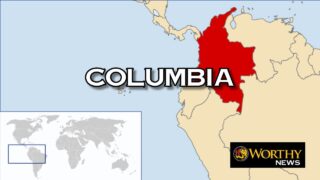
Eight Christian Leaders Found in Mass Grave in Colombia

by Worthy News Washington D.C. Bureau Staff
(Worthy News) – In a tragic case of mistaken identity, Colombian authorities have uncovered a mass grave containing the bodies of eight evangelical Christian leaders who disappeared in April after responding to a summons from a dissident faction of the Revolutionary Armed Forces of Colombia (FARC).
The victims–affiliated with the Iglesia Cristiana Carismática Cuadrangular (ICCC) and the Evangelical Alliance of Colombia (DEAC)–were reportedly executed by the Frente Primero group under the command of Iván Mordisco in the jungle village of Puerto Nuevo, in the Guaviare Department.
According to the attorney general’s office, the victims were originally from Arauca, a volatile region near the Venezuelan border where armed groups frequently target Protestant pastors.
Authorities believe the Christian workers were mistaken for members of the rival Ejército de Liberación Nacional (ELN), which also operates in Arauca. “This situation apparently stems from the origins of some of them; they are of Araucanian origin, and in this criminal paranoia, the perpetrators assumed they were ELN members,” explained prosecutor Raúl González.
The victims–identified as James Caicedo, Óscar García, Máryuri Hernández, Maribel Silva, Isaid Gómez, Carlos Valero, Nixon Peñaloza, and Jesús Valero–had been engaged in humanitarian and spiritual outreach.
Christian Solidarity Worldwide confirmed that Peñaloza served as DEAC treasurer, while Gómez and Silva, a married couple, were preachers who leave behind two small children. Caicedo, a former Foursquare Church pastor, had continued ministering in the region despite persistent threats. All eight had fled Arauca in prior years following a wave of church closures and pastor assassinations.
The discovery of the grave followed the capture of a FARC dissident in May, whose cellphone contained images of the Christians both in captivity and post-mortem. These images enabled authorities to locate the burial site in Calamar, where rudimentary wooden crosses suggest local residents attempted to honor the dead before investigators arrived.
The massacre has shaken the town of Calamar. On the heels of the grim discovery, a drone attack–allegedly by guerrilla fighters–struck an army base in the city center, prompting officials to suspend municipal operations and churches to reschedule services to daylight hours. “There is a tense atmosphere, but people have not stopped congregating,” a local pastor shared. “We perceive the massacre as an isolated incident, but we ask for much prayer.”
According to the 2025 World Watch Report from Open Doors, Colombia remains one of the most dangerous places to be a Christian in Latin America. Drug cartels and armed rebel groups view Christian leaders as obstacles to recruitment and control–especially in rural and indigenous areas. “Church leaders are particularly at risk because they are seen as competing for influence over the young people,” the report states. In some communities, Christian converts are even viewed as traitors to tribal customs and punished with exclusion, violence, or death.
Christianity—especially evangelical and Pentecostal branches—has grown rapidly in Colombia over recent decades. While Catholicism remains dominant, Protestant churches have expanded significantly since the 1960s, driven by missionary efforts, urban migration, and outreach to the poor and marginalized.
Pentecostal churches, with their focus on healing and personal transformation, have especially thrived in conflict-ridden areas, often stepping in where government services are lacking. Today, evangelicals make up an estimated 15–20% of Colombia’s population, one of the highest proportions in Latin America.
This growth, however, has come with risks. Armed groups and cartels often target pastors, seeing them as threats to their influence. Despite violence and persecution, Colombia’s evangelical churches continue to grow, fueled by resilience, grassroots faith, and a strong commitment to peace.
Despite mounting pressure, Colombia’s Christian community continues to serve on the front lines of reconciliation, resisting violence through nonviolence and prayer. For now, their cry is for justice, protection, and peace.
Copyright 1999-2026 Worthy News. This article was originally published on Worthy News and was reproduced with permission.
Latest News from Worthy News
European policymakers, church leaders and representatives of Syria’s Christian communities have urged the country’s transitional authorities to protect minority Christians amid concerns over the future of believers in the war-torn Middle East nation.

A reported Houthi attack has struck Saudi Arabia’s strategically vital East-West oil pipeline, the massive cross-country system designed to keep Saudi crude flowing even when the Strait of Hormuz is threatened or closed.
Spanish-Moroccan relations, already strained over migration, faced more pressure Friday after Spain’s lower house of parliament approved legislation that would grant Spanish citizenship to tens of thousands of Sahrawis born when Madrid administered Western Sahara.

Russia launched fresh air attacks on Ukraine early Friday after NATO reportedly confronted Russian vessels trying to sabotage undersea cables, highlighting concerns that Moscow is attempting to extend the war by targeting Europe’s critical infrastructure.
Iran-backed Houthi forces seized Yemen’s strategic Red Sea port city of Mocha, raising fears for global shipping as escalating Middle East tensions pushed oil prices above $100 a barrel.

The United States and its allies are commemorating the 25th anniversary of the worst terror attacks on American soil, which had worldwide implications ranging from wars to increased surveillance.
Several impoverished Christians have died across Pakistan in recent days amid what advocates describe as a pattern of violence, discrimination and hardship potentially threatening the Christian community throughout the predominantly Muslim nation, Christian sources told Worthy News.