Listeners:
Top listeners:
-
 play_arrow



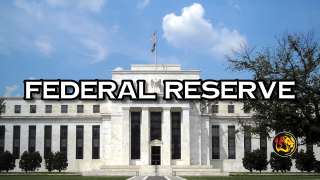
Federal Reserve Delivers Third Consecutive Rate Cut Amid Deep Internal Divisions

by Worthy News Washington D.C. Bureau Staff
(Worthy News) – The Federal Reserve on Wednesday approved its third consecutive interest rate cut, lowering the benchmark federal-funds rate by a quarter percentage point to a range of 3.5% to 3.75%, the lowest level since early 2022. But the decision—passed in a 9–3 vote, the most divided in six years—exposed unusually sharp disagreements over the path forward as policymakers wrestle with a slowing labor market and stubborn inflation.
The Federal Open Market Committee’s quarter-point reduction follows months of weakening job gains and a rise in unemployment to 4.4%, prompting Chair Jerome Powell to argue that the risks to employment now outweigh the risks of inflation.
“This was a close call,” Powell admitted. “We’re in a good place to wait and see how the economy evolves.”
Deepening Divide Inside the Fed
Wednesday’s split decision saw Governor Stephen Miran, a recent Trump appointee, push for a larger 0.5% cut, while Chicago Fed President Austan Goolsbee and Kansas City Fed President Jeffrey Schmid voted to hold rates steady.
The last time the central bank saw three dissents was in 2019—also driven by disagreement over the pace of rate reductions.
New internal projections show:
• A majority of officials expect no more than one cut next year, signaling caution
• Only six of 19 policymakers anticipate the year-end rate being above current levels
• Inflation is now forecast to ease to 2.4% in 2026, slightly lower than previously expected
• Growth expectations for 2026 rose to 2.3%, up from 1.8%
Still, Powell emphasized that the committee is navigating a rare and difficult environment: “Firm price pressures alongside a cooling labor market” — a trade-off the Fed has not faced in decades.
Labor Market Weakness Drives Decision
Powell suggested that after accounting for data overcounting caused by the fall government shutdown, job growth since April “may have been slightly negative.”
“A good part of the slowing likely reflects a decline in the growth of the labor force… though labor demand has clearly softened as well,” he said.
Fed officials also noted:
• Housing remains weak
• Consumer spending is stable
• Business data has been harder to interpret due to the October–November shutdown
Markets Rally on Hopes More Cuts Could Come
Wall Street responded enthusiastically.
• Dow Jones: +497 points (+1%)
• S&P 500: +0.7%
• Nasdaq: +0.3%
Investors welcomed Powell’s tone, which was less restrictive than feared, even as he signaled a higher bar for future cuts.
Long-term borrowing costs remain relatively elevated, with the 10-year Treasury yield at 4.163%, limiting relief for homebuyers.
Political Pressure Intensifies
The rate cut moves policy in President Trump’s preferred direction, but not quickly enough for a White House that is seeking aggressive easing amid complaints over high prices heading into the midterms.
Trump—openly frustrated that Powell didn’t cut earlier—said Tuesday he is close to naming a successor, with National Economic Council Director Kevin Hassett widely viewed as the frontrunner.
Trump’s new Fed appointee, Stephen Miran, has already tilted the Board more dovishly, advocating for deeper cuts.
Still, hawkish members warn that cutting too quickly risks reigniting inflation, which has hovered near 3%, above the Fed’s 2% target.
Fed to Restart Treasury Purchases
In a notable shift, the Fed announced it will resume buying $40 billion in Treasury bills starting Dec. 12, providing additional liquidity as markets adjust to the new rate environment.
What Comes Next?
Powell emphasized that after 75 basis points of cuts since September, the policy rate is now near its “neutral” level—neither stimulating nor restricting the economy.
Future cuts will depend heavily on:
• Next week’s October–November employment data
• December labor readings ahead of the January FOMC meeting
• Next week’s consumer-price index, showing whether inflation risks are re-emerging
“We’re well-positioned to wait and see,” Powell said, signaling that a January cut is not planned—but not ruled out.
Copyright 1999-2026 Worthy News. This article was originally published on Worthy News and was reproduced with permission.
Latest News from Worthy News

A municipal beach worker searching Israel’s Mediterranean coastline for items lost by swimmers discovered something far older than expected: an exceptionally rare 2,500-year-old coin minted in ancient Cyprus.

Health and Human Services Secretary Robert F. Kennedy Jr. said federal investigators spent approximately eight months locating Dr. Anthony Fauci’s private journals, which Kennedy claimed had been scattered across 11 separate government servers.

Skywatchers are preparing for one of the most remarkable astronomical nights of the decade as a total solar eclipse, the peak of the Perseid meteor shower and a broad gathering of six planets converge around August 12.

The United States has condemned the “horrific killing” of nine relatives of Reverend Ezekiel Dachomo, a Nigerian pastor whose earlier appeal warned that “fear has become a way of life” in Nigeria’s violence-plagued Plateau State.

North Korean leader Kim Jong Un marked the 73rd anniversary of the Korean War armistice by paying tribute at war memorials and cemeteries, accompanied for the first time by his daughter, Ju Ae, in a move that analysts say further underscores her increasingly prominent public role.

President Donald Trump said Monday that Iran is seeking negotiations after two weeks of sustained American airstrikes, portraying Tehran’s diplomatic outreach as evidence that the U.S. military campaign has forced the Islamic regime back to the bargaining table.
President Donald Trump and three Republican senators are pressing Senate Majority Leader John Thune to keep the chamber in session through August until lawmakers pass the SAVE America Act, escalating a growing dispute over one of the president’s top election-integrity priorities.