Listeners:
Top listeners:
-
 play_arrow



Foreign Missionary Era Ending In Turkey As Authorities Detain, Deport Christians

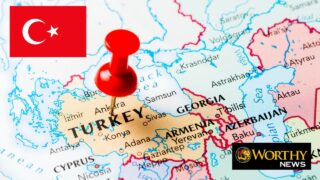
by Stefan J. Bos, Worthy News Chief International Correspondent
ANKARA (Worthy News) – The era of foreign missionaries in Turkey is drawing to a close as authorities increasingly detain, deport, or bar Christian workers from reentering the Muslim-majority nation, according to church leaders and human-rights advocates.
Yet despite the crackdown, missionaries and local pastors say they remain hopeful that younger Turkish church leaders will continue the work and inspire the next generation to follow Christ in the NATO member state.
Authorities’ actions come amid intensifying pressure on Christians generally: Turkey ranks No. 45 on the 2026 World Watch List, the annual Open Doors ranking of the 50 countries with the most extreme persecution of Christians.
The shift accelerated after the 2016 arrest of American pastor Andrew Brunson, who led a small Protestant church in the coastal city of Izmir. Turkish officials initially moved to deport Brunson and his wife, Norine, but later charged him with terrorism and espionage—allegations widely rejected by international religious-freedom advocates.
Norine Brunson was released after two weeks, but Andrew Brunson spent nearly two years in detention, triggering a major diplomatic crisis with the United States. Pressure from the Trump administration eventually led to his release in 2018 after U.S. sanctions and tariffs strained Turkey’s economy.
ARREST OF PASTOR MARKED TURNING POINT
Brunson—who had lived in Turkey for 25 years—said his case marked a change in government strategy. Shortly after his release, authorities began expelling or barring foreigners linked to Protestant churches by labeling them “national security threats.”
Many had lived, led congregations, and raised families in Turkey for decades.
Since then, hundreds of foreign Protestants have been expelled or denied reentry, according to Alliance Defending Freedom International.
Christians make up less than one percent of Turkey’s population, with Protestants estimated at around 10,000 believers who lack legal recognition and face societal suspicion.
Protestant leaders say legal, social, and bureaucratic barriers make church activity precarious.
DEPORTATIONS TARGET PROTESTANT ACTIVITY
Human-rights groups characterize the deportations and entry bans as part of a broader effort to curb Christian, especially Protestant, activity.
The U.S. Commission on International Religious Freedom has for years documented religious-freedom concerns in Turkey.
While Brunson acknowledged some religious freedom remains, he warned it is fragile and uneven, and local church leaders fear the pressure could now extend from foreigners to Turkish believers.
Early in President Recep Tayyip Erdogan’s tenure, evangelical leaders said reforms tied to European Union accession talks briefly expanded space for religious expression.
But as those talks cooled, state control tightened and scrutiny of Christian activity grew.
LOCAL CHURCHES FACE LEGAL LIMBO
Evangelical congregations cannot legally register as churches, train clergy, open religious schools, or establish cemeteries. Most meet in rented spaces or private homes and risk closure if authorities receive complaints, church leaders say.
Despite these pressures, Turkish Christians point to growth in the local church: all Protestants in Turkey are now converts from Islam, and more than 200 congregations meet nationwide, though legal recognition remains elusive.
Advocates are watching a case before the European Court of Human Rights—the first to address mission-related expulsions—as a potentially significant precedent for religious freedom claims.
Rights advocates say the campaign has contributed to Turkey’s placement at number 45 on the Open Doors World Watch List 2026, which ranks the 50 countries where Christians face the most severe persecution.
While Turkey does experience isolated but not mass killings of Christians seen in higher-ranked nations, the ranking reflects systematic pressure, according to investigators. Open Doors cited deportations, surveillance, legal restrictions, and societal hostility-particularly against Protestants and converts from Islam as examples of persecution.
Yet as foreign missionaries depart, church leaders say the future of Christianity in Turkey increasingly rests with local believers. “The church is losing people with deep experience and love for this country,” Brunson said in an interview. “But it’s going to stand on its own feet.”
Copyright 1999-2026 Worthy News. This article was originally published on Worthy News and was reproduced with permission.
Latest News from Worthy News
European policymakers, church leaders and representatives of Syria’s Christian communities have urged the country’s transitional authorities to protect minority Christians amid concerns over the future of believers in the war-torn Middle East nation.

A reported Houthi attack has struck Saudi Arabia’s strategically vital East-West oil pipeline, the massive cross-country system designed to keep Saudi crude flowing even when the Strait of Hormuz is threatened or closed.

Spanish-Moroccan relations, already strained over migration, faced more pressure Friday after Spain’s lower house of parliament approved legislation that would grant Spanish citizenship to tens of thousands of Sahrawis born when Madrid administered Western Sahara.

Russia launched fresh air attacks on Ukraine early Friday after NATO reportedly confronted Russian vessels trying to sabotage undersea cables, highlighting concerns that Moscow is attempting to extend the war by targeting Europe’s critical infrastructure.
Iran-backed Houthi forces seized Yemen’s strategic Red Sea port city of Mocha, raising fears for global shipping as escalating Middle East tensions pushed oil prices above $100 a barrel.

The United States and its allies are commemorating the 25th anniversary of the worst terror attacks on American soil, which had worldwide implications ranging from wars to increased surveillance.
Several impoverished Christians have died across Pakistan in recent days amid what advocates describe as a pattern of violence, discrimination and hardship potentially threatening the Christian community throughout the predominantly Muslim nation, Christian sources told Worthy News.