Listeners:
Top listeners:
-
 play_arrow



France’s Political Turmoil Meets Prophetic Calendar as Palestinian State Recognition Nears

by Emmitt Barry, Worthy News Washington D.C. Bureau Chief
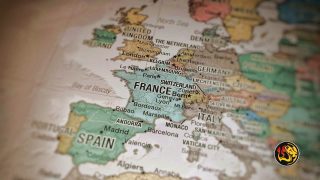
PARIS (Worthy News) – France was gripped by a second wave of nationwide strikes on Thursday, as hundreds of thousands marched against austerity measures and looming budget cuts—unrest that not only deepens the political crisis for President Emmanuel Macron and his new prime minister, Sébastien Lecornu, but also unfolds in a season many prophecy watchers view as charged with significance.
Interior Minister Bruno Retailleau warned of extremist agitators exploiting the unrest. “Faced with numerous ultra-leftist groupuscules, vandals, and opportunistic delinquents who will want to take advantage of the crowd and sow disorder, we will be there. I have given very clear instructions,” he posted on X.
Authorities deployed 80,000 police and gendarmes nationwide, backed by riot units, drones, and armored vehicles. By midday, 58 arrests had been made, including 11 in Paris, according to police. French daily Le Figaro reported as many as 900,000 people were expected to join the day of action.
Disruptions Across France
The “Bloquons Tout” (“Block Everything”) protest movement, launched on Sept. 10, expanded Thursday with broad participation from teachers, rail workers, pharmacists, farmers, and students.
- France’s SNCF rail operator reported “some disruptions” to high-speed trains but said most services would continue running.
- Pharmacies staged widespread walkouts, with 95 percent shuttering in protest against new rules on generic drugs that unions say could close nearly one-third of businesses.
- France’s high school union, SNES-FSU, said 45 percent of teachers joined the strike.
Social media footage showed masked youths setting off flares at the Finance Ministry in Bercy and blocking tramlines in Paris.
Political Stakes for Lecornu
The unrest poses an early test for Lecornu, 39, who became France’s fourth prime minister in a year after François Bayrou’s government collapsed earlier this month over austerity plans. Bayrou’s proposal to cut €43.8 billion ($51.3 billion) by 2026, including axing Easter Monday and Victory Day holidays, triggered widespread outrage.
Seeking to ease tensions, Lecornu scrapped the holiday cuts and announced reduced lifetime benefits for former government ministers, a symbolic move expected to save €4.4 million annually. He has also opened talks with opposition leaders and unions in hopes of avoiding a no-confidence vote in the deeply fractured Parliament.
But France’s debt–set to surpass €3 trillion ($3.5 trillion), or 110 percent of GDP–remains a pressing crisis. The European Commission forecasts deficits above 5.5 percent of GDP through 2026, defying EU fiscal rules.
Political Divide Widens
Unions and left-wing parties urged continued mobilization. Jean-Luc Mélenchon, leader of France Insoumise (LFI), cautioned against provocation: “Refuse any disorder, because that is what the Interior Minister hopes for to justify his habitual violence against the people.”
By contrast, conservatives framed the strikes as destructive. Laurent Wauquiez, leader of Les Républicains, said: “While there are those who block everything and destroy everything, there is a France that works, gets up early, and pays its taxes. It is the voice of this silent majority that must be defended.”
Far-right National Rally leader Marine Le Pen predicted Lecornu’s failure and called for new elections.
Prophetic Revelance
As parts of the world prepare to witness a solar eclipse on September 21, France will face its own moment of darkness with another nationwide strike scheduled on the very same day. Prime Minister Sébastien Lecornu confronts the daunting task of balancing EU budget demands, swelling public anger, and a fractured Parliament where President Macron’s centrist alliance no longer commands a majority. The fragility of France’s leadership was already exposed by the collapse of François Bayrou’s cabinet on Sept. 8, leaving Lecornu as the nation’s fourth prime minister in just a year.
That instability may be tested further as France steps onto the global stage with a momentous move: its plan to recognize a Palestinian state at the United Nations on Sept. 22. The announcement is scheduled just after Yom Teruah, the biblical Feast of Trumpets, during the solemn “Days of Awe” leading to Yom Kippur. Prophecy watchers see the timing as significant, interpreting France’s internal unrest and international choices as part of a larger drama shaping its destiny in Europe and the Middle East.
Copyright 1999-2026 Worthy News. This article was originally published on Worthy News and was reproduced with permission.
Latest News from Worthy News
The Republican-led Senate narrowly rejected another attempt Thursday to force an end to unauthorized U.S. military operations against Iran, preserving President Donald Trump’s ability to continue the campaign without a new authorization from Congress.
Hungary’s only nuclear power plant could be forced to shut down within days after record-low water levels on the Danube River sharply reduced its cooling capacity, raising fresh concerns over Europe’s energy security amid an intense heatwave.

President Donald Trump announced Thursday that Hamas has agreed to a phased process leading to the “complete disarmament” of the terrorist organization and other armed factions in the Gaza Strip, calling the reported agreement a historic step toward lasting peace.
President Donald Trump openly questioned whether Senate Majority Leader John Thune should remain in his leadership post as tensions intensified over the Senate’s failure to advance Trump’s election-integrity agenda.

Senior U.S. intelligence officials have concluded that China’s alleged acquisition of American voter-registration data falls within the government’s definition of foreign election interference, according to information released Thursday by the White House.

The widening war between the United States and Iran entered a dangerous new phase Wednesday as American and Saudi forces carried out coordinated strikes against Iran-backed militias across Iraq, marking the first publicly acknowledged joint combat operation of its kind between Washington and Riyadh.

Spanish authorities warned Wednesday of an “extraordinary, exceptional situation” after hundreds of migrants swam from Morocco to the tiny Spanish territory of Ceuta, overwhelming reception facilities and prompting renewed concern over migration pressures on Europe’s southern border.