Listeners:
Top listeners:
-
 play_arrow



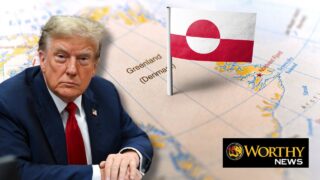
Greenland Warns Of Possible Invasion As Trump Revives Takeover Threats

by Stefan J. Bos, Worthy News Chief International Correspondent
NUUK, GREENLAND (Worthy News) – Greenland’s prime minister has warned residents and authorities to prepare for possible disruptions and security risks as U.S. President Donald J. Trump continues to threaten to takeover the Arctic island, despite mounting concern within the United States Congress.
“It’s not likely there will be a military conflict, but it can’t be ruled out,” Prime Minister Jens-Frederik Nielsen said at a press conference Tuesday in the capital, Nuuk.
Nielsen said Greenland’s government will establish a task force made up of representatives from all relevant local authorities to help people prepare for potential disruptions to daily life.
As part of those preparations, the government is distributing new public guidelines, including a recommendation that households keep enough food and essential supplies to last at least five days.
Trump has repeatedly claimed the United States needs to own Greenland for security reasons and earlier Tuesday posted an artificial intelligence-generated image on social media showing himself planting a U.S. flag on the island.
GREENLAND’S STATUS AND DENMARK’S RESPONSE
Greenland, home to about 57,000 people, is part of the Kingdom of Denmark, but enjoys broad autonomy, governing most domestic affairs while Copenhagen retains control over defense and foreign policy.
Denmark has in recent days deployed additional troops to Greenland to strengthen military readiness, Danish officials said, amid heightened tensions sparked by Trump’s remarks.
Copenhagen has repeatedly stressed that Greenland is not for sale and that any discussion about its future must respect international law and the wishes of the Greenlandic people.
Legal experts note that Trump’s statements face major constitutional hurdles in the United States.
Any formal acquisition of foreign territory by the United States—including Greenland—whether through purchase, annexation, or transfer of sovereignty, requires approval by the U.S. Congress, making unilateral executive action by a president legally impossible.
US LAW LIMITS PRESIDENTIAL POWER
Analysts also point to the War Powers Resolution of 1973, enacted to limit a president’s authority to initiate or expand military action abroad without congressional consent, reinforcing the Constitution’s system of checks and balances.
The law requires the president to notify Congress within 48 hours of deploying U.S. armed forces into hostilities or situations of imminent conflict and bars those forces from remaining for more than 60 days without explicit congressional authorization.
Under the U.S. Constitution, war powers are divided: Congress alone has the authority to declare war and approve military funding, while the president serves as commander in chief of the armed forces.
Several members of Congress have warned that any unilateral move against Greenland would violate constitutional limits on presidential power, undermine NATO unity, and risk a serious rupture with Denmark, a longtime U.S. ally.
CONGRESSIONAL OPPOSITION AND SECURITY ARGUMENTS
Republican Senator Rand Paul has publicly rejected any military approach, saying he would “do everything to stop any kind of military takeover of Greenland,” according to U.S. media reports. He warned such a move would violate constitutional principles and entangle the United States in unnecessary conflicts.
Republican Senator Lisa Murkowski, whose state has major Arctic interests, has also questioned the feasibility of Trump’s proposal, saying there is no support in Congress for acquiring Greenland and stressing the island should be treated as a partner, not a possession.
Supporters of Trump’s stance argue that Greenland’s strategic location is vital to U.S. and allied security in the Arctic amid rising Russian and Chinese activity. However, no formal plan has been presented to Congress.
Trump himself continues to insist that U.S. control of Greenland would be necessary for security reasons, though legal experts stress that any such move would still require explicit congressional approval.
Copyright 1999-2026 Worthy News. This article was originally published on Worthy News and was reproduced with permission.
Latest News from Worthy News

The United States unleashed a heavy wave of airstrikes against Iran early Thursday after President Donald Trump vowed severe retaliation for Tehran’s surprise ballistic missile attack on American forces stationed in Jordan.

Christians in Nigeria were mourning Wednesday after dozens of believers were killed in coordinated attacks on villages in the country’s northwestern Kaduna State, with local monitors warning the death toll may exceed 60.

Antisemitic violence worldwide reached its deadliest level in more than three decades during 2025, according to a new report documenting a sharp escalation in threats and attacks against Jewish communities.

Israeli Prime Minister Benjamin Netanyahu said Israeli special forces could be called upon if he were threatened with arrest while traveling abroad under a warrant issued by the International Criminal Court.

Ukraine said Wednesday it struck two of Russia’s largest oil refineries in overnight long-range drone attacks, intensifying pressure on Moscow as President Volodymyr Zelenskyy met U.S. President Donald J. Trump in Washington.

Three Christian men who were detained in Pakistan for allegedly “desecrating” the Quran, viewed by Muslims as holy, have been released after police and authorities concluded the allegation “stemmed from a personal dispute rather than an act of blasphemy,” Christian advocates told Worthy News Wednesday.

Japan’s prime minister warned Wednesday that “every second counts” after a 6.8-magnitude earthquake struck the country’s southern Kumamoto Prefecture, killing more than a dozen people.