Listeners:
Top listeners:
-
 play_arrow



IAEA: Iran Almost Has Nuclear Weapon


By Stefan J. Bos, Chief International Correspondent Worthy News
TEHRAN/VIENNA (Worthy News) – The United Nations’ nuclear watchdog warned Wednesday that Iran had accelerated its production of near-weapons-grade uranium amid mounting tensions between Tehran and Washington.
The Vienna-based International Atomic Energy Agency said in its latest report that as of February 8, Iran has 274.8 kilograms (605.8 pounds) of uranium enriched up to 60 percent.
That’s an increase of 92.5 kilograms (203.9 pounds) since the IAEA’s last report in November.
That material is a short, technical step away from weapons-grade levels of 90 percent, according to experts.
The revelations came after reports that Iran has stepped up air defenses around its nuclear sites amid concerns of an imminent attack by Israel and the United States.
U.S. President Donald J. Trump’s administration says Iran must be prevented from acquiring nuclear weapons, a view shared by Israel.
Yet the IAEA suggested that Iran acceleratedits nuclear program since Trump’s inauguration as the 47th president of the United States.
The IAEA has warned that time is running out for diplomacy to impose new restrictions on Iran’s activities before the country has a nuclear weapon.
Tehran claims that its nuclear program is for “peaceful” purposes, but Israel and most of its allies, including the United States, have their doubts.
The IAEA seemed to share these concerns.
“The significantly increased production and accumulation of highly enriched uranium by Iran, the only non-nuclear weapon state to produce such nuclear material, is of serious concern,” the IAEA said.
Copyright 1999-2026 Worthy News. This article was originally published on Worthy News and was reproduced with permission.
Latest News from Worthy News

A Dutch community remained in shock Saturday after a 13-year-old girl was detained following the discovery of her parents’ bodies in their home in the northern Netherlands.
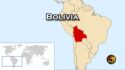
Bolivian President Rodrigo Paz declared a 90-day state of emergency Saturday, empowering the military to clear road blockades after nearly 50 days of anti-government protests that have included widespread road blockades, leaving at least 14 people dead and crippling the nation’s economy.
A powerful thunderstorm system sweeping across Western Europe killed at least one person in the Netherlands, injured several others in Belgium and Germany, and caused widespread damage as nearly 190,000 lightning flashes illuminated the skies, authorities said Saturday.

Israeli strikes killed at least 10 people in Lebanon on Saturday despite a ceasefire that took effect hours earlier, officials said, with Israel claiming it was responding to attacks by the Iran-backed Hezbollah group.
Israel and Iran-backed Hezbollah have agreed to a ceasefire that was to begin Friday afternoon, Worthy News learned.

At least 10 people, including four children, were injured in a Russian strike on Ukraine’s northeastern Kharkiv region, Ukrainian authorities said Friday. In southern Ukraine, the State Emergency Service reported that one person was killed and four others were injured in a separate Russian attack on the Odesa region.

President Donald Trump signed the temporary peace deal with Iran ahead of schedule Wednesday at the Palace of Versailles in France, kicking off negotiations over a final nuclear deal.