Listeners:
Top listeners:
-
 play_arrow



Indonesia Facing Worst Stock Upheaval In Decades

by Stefan J. Bos, Worthy News Chief International Correspondent
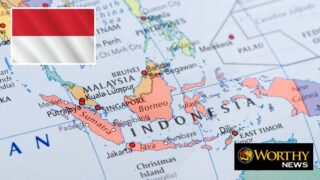
JAKARTA (Worthy News) – Indonesia, Southeast Asia’s biggest economy, braced for more financial turmoil Friday after stocks suffered their deepest two-day rout in nearly three decades, underscoring growing investor unease about policies under former general-turned-President Prabowo Subianto.
The sell-off intensified as Morgan Stanley Capital International (MSCI), a major global index provider that tracks financial markets, warned it may downgrade Indonesia’s current classification from an “emerging market” to “frontier” status.
Such a shift would be significant because frontier markets are widely viewed as smaller, less liquid, and higher-risk investment environments, potentially reducing foreign capital flows into Indonesia.
The warning rattled investors and contributed to trading disruptions as regulators sought to prevent panic selling. “It was scary, I could not access my stocks,” said Annie, a Christian retail investor who told Worthy News she uses part of her investment income to support church aid for flood victims and other vulnerable communities.
MSCI DOWNGRADE FEARS SHAKE INDONESIA
Concerns about a possible downgrade surfaced as questions grew over the independence of Indonesia’s central bank, following reports that Prabowo’s nephew recently rose to senior ranks within the institution.
The developments have added to controversy surrounding Prabowo’s pledge to transform the sprawling Muslim-majority nation of some 287 million people into one of the world’s fastest-growing economies.
“Fast forward 15 months and investor confidence in Indonesia’s outlook has rarely been so weak,” said Richard Frost, a senior editor at Bloomberg News.
Market observers noted the stock exchange is enduring its worst downturn since the Asian financial crisis of 1998, while MSCI has also raised concerns about transparency and governance in Indonesia’s equity markets.
RUPIAH PRESSURE ADD TO STRESS
Indonesia’s currency, the rupiah, has been trading near record lows amid worries that Prabowo’s administration could expand fiscal spending sharply in an effort to stimulate growth.
Foreign investors have also been reducing exposure to Indonesian bonds, with overseas holdings reportedly falling to their lowest levels in nearly two decades, according to financial analysts cited by Bloomberg News.
Not all of Indonesia’s economic challenges stem from Prabowo’s presidency. A controversial $35 billion plan to relocate the national capital to a new site in the rainforests of Borneo was initiated under his predecessor, Joko Widodo.
Structural weaknesses remain as well, including the low “free float” of Indonesian equities—the portion of shares available for public trading—which is among the lowest globally.
SMALL INVESTORS WARN OF GRAFT
Much of the market is controlled by major shareholders in tightly held companies, leaving many smaller retail investors feeling excluded, observers say.
Analysts also point to longstanding concerns over corruption and limited transparency, factors that continue to undermine confidence in Indonesia’s markets.
There have also been renewed questions about Prabowo’s democratic credentials. He reportedly considered, but ultimately decided against, using the military to quell protests last August sparked by anger over inequality.
He has also removed a longtime finance minister respected by foreign investors, while his administration has begun seizing plantations and mining concessions as part of a broader effort targeting powerful business elites.
INVESTORS WATCH PRABOWO RESPONSE
Critics warn that smaller companies and families who depend on plantations may suffer alongside billionaires caught up in the government’s campaign.
Investors are now watching closely how Prabowo responds to the latest market turmoil and whether his next steps will restore confidence and promote economic stability for the broader population, not just Indonesia’s wealthiest elites.
Copyright 1999-2026 Worthy News. This article was originally published on Worthy News and was reproduced with permission.
Latest News from Worthy News

Antisemitic violence worldwide reached its deadliest level in more than three decades during 2025, according to a new report documenting a sharp escalation in threats and attacks against Jewish communities.

Israeli Prime Minister Benjamin Netanyahu said Israeli special forces could be called upon if he were threatened with arrest while traveling abroad under a warrant issued by the International Criminal Court.

Ukraine said Wednesday it struck two of Russia’s largest oil refineries in overnight long-range drone attacks, intensifying pressure on Moscow as President Volodymyr Zelenskyy met U.S. President Donald J. Trump in Washington.

Three Christian men who were detained in Pakistan for allegedly “desecrating” the Quran, viewed by Muslims as holy, have been released after police and authorities concluded the allegation “stemmed from a personal dispute rather than an act of blasphemy,” Christian advocates told Worthy News Wednesday.

Japan’s prime minister warned Wednesday that “every second counts” after a 6.8-magnitude earthquake struck the country’s southern Kumamoto Prefecture, killing more than a dozen people.

Israeli Defense Minister Israel Katz has ordered the military to expand counterterrorism operations across Judea and Samaria, warning that Palestinian terrorist organizations are attempting to rebuild their strength after suffering major setbacks during previous Israeli campaigns.

The United States is preparing to assume responsibility for financing and operating concrete plants used to seal Hamas terror tunnels in the Gaza Strip, according to an Israel Hayom report published Wednesday.