Listeners:
Top listeners:
-
 play_arrow



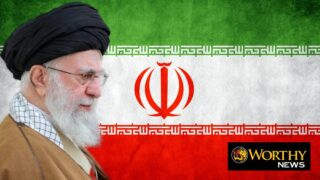
Khamenei Reemerges on Sacred Shiite Day, Framing War as Spiritual Triumph

by Emmitt Barry, Worthy News Washington D.C. Bureau Chief
(Worthy News) – Iran’s Supreme Leader Ayatollah Ali Khamenei made his first public appearance Saturday since the outbreak of the 12-day war between Iran and Israel, emerging during a somber Ashura ceremony in Tehran after weeks of seclusion that raised questions about his health and security.
The 86-year-old leader, absent from the public eye since hostilities began on June 13, appeared before a crowd of mourners at a mosque adjacent to his residence. State television showed him walking slowly to a seat beside key officials, including Iran’s speaker of Parliament and justice minister, while the crowd chanted and rose in reverence. His reappearance came just days after U.S. and Israeli strikes severely damaged several of Iran’s nuclear facilities, prompting fears that Khamenei had retreated to a secure bunker.
Before his public return, Khamenei had issued a prerecorded video declaring a “victory” over Israel and the United States. “The false Zionist regime was nearly crushed,” he claimed, while downplaying the effectiveness of the U.S. assault. In his message, he congratulated Iranians for what he described as a national triumph and warned Washington against further military action, saying Tehran had delivered “a harsh slap” to a U.S. base in Qatar.
The Ashura ceremony commemorates the martyrdom of Hussein ibn Ali, the grandson of the Prophet Muhammad, a central figure in Shiite Islam. In Tehran, mourners dressed in black participated in processions, beating their chests and performing ritual acts of grief. The highly symbolic setting of Khamenei’s return reinforced both his religious and political stature amid heightened tensions with Israel and the West.
Meanwhile, Iran’s President Masoud Pezeshkian did not attend the BRICS summit in Brazil on Sunday, sending Foreign Minister Abbas Araghchi in his place. The bloc–now expanded to include Iran, Indonesia, Egypt, Ethiopia, and the UAE–condemned the attacks on Iran. Araghchi accused both Israel and the United States of committing violations that should be “accounted for on the international stage.”
Despite Khamenei’s defiant tone, the aftermath of the war has been costly. Iran confirmed the deaths of more than 900 people, extensive damage to its nuclear sites, and has since denied UN inspectors further access. The International Atomic Energy Agency has been effectively barred from monitoring Iran’s nuclear activity–raising new concerns over Tehran’s enrichment of uranium to near weapons-grade levels.
Israel’s initial strike on June 13 triggered the war, which saw Iran retaliate with over 550 ballistic missiles aimed at Israeli territory. Though most were intercepted, 28 people were killed and damage was reported across multiple regions. In addition to nuclear sites, Israel targeted Iranian military leaders, air defenses, and top atomic scientists in a campaign aimed at neutralizing Tehran’s nuclear threat.
As millions across Iran commemorated the Ashura holiday under tight security, NetBlocks reported a two-hour nationwide internet outage, further underscoring the regime’s sensitivity to unrest and information control in a volatile postwar environment. Whether Khamenei’s return signals a reassertion of power or a calculated show of resilience remains to be seen, but the war’s consequences continue to reverberate far beyond the battlefield.
Understanding the Spiritual Dynamics of the Timing of the Ayatollah’s Re-emergence
Twelver Shi’ism, the dominant religious ideology in Iran, profoundly shapes the country’s political and military posture—especially in times of conflict like the recent war with Israel. At the heart of Twelver theology is the belief in a succession of twelve imams, the last of whom—known as the Mahdi or the Hidden Imam—was taken into occultation and will return at the end of time to establish global justice. This eschatological vision fuels the Iranian regime’s conviction that it plays a divine role in resisting perceived tyranny, particularly from Western powers and Israel, whom they view as unjust oppressors opposing God’s order.
Ashura, the day commemorating the martyrdom of Imam Hussein, the third Shiite imam, is central to Twelver identity and often used to sacralize struggle and martyrdom. Khamenei’s public reappearance during this sacred day was deeply symbolic—not merely a religious observance but a calculated act of theological reinforcement. By linking his return to Ashura, he cast the recent war and Iran’s losses within the framework of redemptive suffering, echoing Hussein’s defiance at Karbala. This framing positions Iran not as a victim of military aggression but as a righteous nation enduring hardship on the path to divine victory.
Theocratic leadership in Iran views resistance as a religious duty tied directly to the Mahdist mission. Khamenei, as Supreme Leader and designated Vali-ye Faqih (Guardian Jurist), is seen as the deputy of the Hidden Imam during his absence. His rhetoric during and after the war—declaring a “victory” over Zionist forces and a “slap” to America—was not merely political posturing. It echoed Twelver eschatology, where confrontation with injustice is not just legitimate but required, even if it leads to apparent worldly defeat, because true justice belongs to God and His awaited representative.
This theology emboldens Iran’s stance against Israel and the West, framing it as sacred resistance rather than geopolitical strategy. By invoking the imagery of Karbala and pledging continued defiance, Khamenei reinforces the narrative that Iran is a vessel of divine justice, suffering now for an ultimate, prophesied triumph. In this light, even devastating losses—such as hundreds killed and nuclear setbacks—are portrayed not as failures, but as part of a larger, divinely guided struggle that aligns the Islamic Republic with Imam Hussein’s legacy and prepares the ground for the Mahdi’s return.
Copyright 1999-2026 Worthy News. This article was originally published on Worthy News and was reproduced with permission.
Latest News from Worthy News

The Justice Department has permanently abandoned plans to create a $1.8 billion Anti-Weaponization Fund, Acting Attorney General Todd Blanche told lawmakers Tuesday, ending a controversial proposal that had become a political obstacle for Senate Republicans.

Senior members of Israel’s delegation said Tuesday that Hezbollah had not stopped fighting despite pledging to U.S. President Donald Trump a day earlier that it would de-escalate, as Israeli and Lebanese representatives opened a new round of U.S.-brokered talks in Washington.
The United States carried out fresh self-defense strikes on Iran’s Qeshm Island on Tuesday after American forces intercepted Iranian drones and missiles aimed at regional waters, Kuwait, and Bahrain, U.S. Central Command said.

A Kenyan court on Tuesday extended for another three weeks a suspension of a proposed U.S.-backed Ebola quarantine facility that has sparked deadly protests and fierce public debate, while ordering the government to disclose its agreement with Washington.
A South Carolina jury on Monday found a convenience store owner not guilty of murder in the 2023 shooting death of a Black 14-year-old boy, ending a closely watched case that fueled debate in the United States over race, self-defense laws, and the use of deadly force.

Concerns are growing over the fate of Iranian Christian convert, journalist, and human rights defender Mary Mohammadi after reports emerged that she disappeared following an apparent detention by Iranian authorities.

Andrew Left, one of the world’s most prominent short sellers and founder of Citron Research, was convicted Monday on multiple securities fraud charges in a landmark U.S. case examining whether social media posts about publicly traded companies crossed the line into illegal market manipulation.