Listeners:
Top listeners:
-
 play_arrow



Senators Worry About Spending, Debt Increase In Trump’s ‘Big, Beautiful Bill’

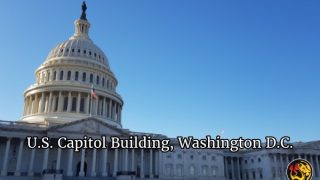
By Thérèse Boudreaux | The Center Square
(Worthy News) – Republicans’ behemoth budget reconciliation bill still faces major hurdles after passing the U.S. House last week, with multiple senators raising concerns about the legislation’s cost.
The One Big Beautiful Bill Act in its current form hikes the debt ceiling by $4 trillion and funds large swaths of Trump’s tax, border, energy, and defense agenda, including codifying President Donald Trump’s 2017 tax cuts. The legislation consists of 11 separate House committee prints that collectively fulfill the April budget resolution’s 10-year spending and savings instructions.
That budget blueprint allowed House committees to budget $4.5 trillion in lost revenue over the next decade, provided they also find $2 trillion in cuts and assume $2.6 trillion in economic growth.
Since House committees found only $1.5 trillion in cuts – including to entitlement programs like Medicaid – the bill authorizes $4 trillion in spending. But organizations like the Committee for a Responsible Federal Budget say the true cost of the bill could amount to a $5.2 trillion federal debt increase.
House Speaker Mike Johnson, R-La., barely garnered enough Republican votes to advance the bill through his chamber after partially fulfilling demands from multiple GOP factions, including fiscal hawks.
But the delicate balance may not survive if Senate leaders make the controversial changes they want – such as raising the debt ceiling by $5 trillion and undoing the House’s Inflation Reduction Act funding clawbacks – and enough Republican senators already oppose the bill in its existing form to tank it once it reaches the upper chamber.
Sen. Rand Paul, R-Ky., said he’s “a no” on the bill “[until] everyone in Washington gets serious about paying down our national debt,” which is set to surpass $37 trillion in 2025.
“Republicans promised Americans we would rein in wasteful spending and tackle the national debt if they gave us control of all three branches of government,” Paul said in a recent X post. “Instead, my colleagues want to tack on more to our national debt instead of making necessary cuts.”
But the Senate’s purported plans will likely skyrocket the cost of the already expensive bill, due to the budget blueprint also allowing Senate committees to spend up to $1.5 trillion on their own policy wishes.
For while House committees operated under the current law baseline, which assumes that extending the tax cuts would result in trillions of lost federal revenue – hence their work to find $1.5 trillion in cuts – the Senate decided to adopt a current policy baseline when calculating their costs.
The controversial accounting tactic, which critics call a “gimmick,” treats the tax cut extension as a continuation of current law rather than new policy, theoretically zeroing out the cost of permanently codifying the TCJA.
Sen. Ron Johnson, R-Wis., called the bill’s trajectory “mortgaging our children’s future” in multiple social media posts and comments to reporters.
“Republican leaders have repeatedly said, ‘we don’t have a revenue problem, we have a spending problem,’ Johnson said on X. “I believe there are enough Republican Senators to force them to live up to their rhetoric.”
The Senate is also looking at raising the debt ceiling by $5 trillion rather than $4 trillion, to which Paul has vehemently objected, telling reporters that “there’s nothing fiscally conservative about expanding the debt ceiling more than we’ve ever done it before.”
Because the budget reconciliation process bypasses the Senate filibuster, the upper chamber could pass the final package by a simple majority vote. But if just two more senators join Rand and Johnson in voting against the megabill, Trump’s entire policy agenda could fall apart.
Copyright 1999-2026 Worthy News. This article was originally published on Worthy News and was reproduced with permission.
Latest News from Worthy News

The United States unleashed a heavy wave of airstrikes against Iran early Thursday after President Donald Trump vowed severe retaliation for Tehran’s surprise ballistic missile attack on American forces stationed in Jordan.

Christians in Nigeria were mourning Wednesday after dozens of believers were killed in coordinated attacks on villages in the country’s northwestern Kaduna State, with local monitors warning the death toll may exceed 60.

Antisemitic violence worldwide reached its deadliest level in more than three decades during 2025, according to a new report documenting a sharp escalation in threats and attacks against Jewish communities.

Israeli Prime Minister Benjamin Netanyahu said Israeli special forces could be called upon if he were threatened with arrest while traveling abroad under a warrant issued by the International Criminal Court.

Ukraine said Wednesday it struck two of Russia’s largest oil refineries in overnight long-range drone attacks, intensifying pressure on Moscow as President Volodymyr Zelenskyy met U.S. President Donald J. Trump in Washington.

Three Christian men who were detained in Pakistan for allegedly “desecrating” the Quran, viewed by Muslims as holy, have been released after police and authorities concluded the allegation “stemmed from a personal dispute rather than an act of blasphemy,” Christian advocates told Worthy News Wednesday.

Japan’s prime minister warned Wednesday that “every second counts” after a 6.8-magnitude earthquake struck the country’s southern Kumamoto Prefecture, killing more than a dozen people.