Listeners:
Top listeners:
-
 play_arrow



Swiss Voters Reject Population Cap Referendum Amid Migration Debate

by Stefan J. Bos, Worthy News Europe Bureau Chief
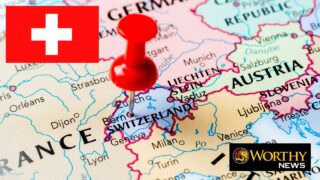
BERN, SWITZERLAND (Worthy News) – Swiss voters narrowly rejected a proposal Sunday to cap the Alpine nation’s population at 10 million people by 2050 amid concerns over rising immigration, including from predominantly Muslim countries, dealing a setback to the country’s largest right-wing party and avoiding a clash with the European Union over freedom of movement.
With nearly all votes counted, about 55 percent of voters opposed the measure while roughly 45 percent supported it, according to preliminary official results. Turnout was reported at around 59 percent.
The referendum, backed by the right-wing Swiss People’s Party (SVP), was closely watched across Europe and described by some analysts as Switzerland’s “Brexit moment” — a reference to Britain’s exit from the European Union. Although Switzerland is not an EU member, a victory for the proposal could ultimately have forced the country to reconsider key agreements with the 27-nation bloc.
Support for the measure was strongest in rural cantons, while opposition was concentrated in major cities and border regions, including much of French-speaking western Switzerland.
Swiss Justice Minister Beat Jans, a leading opponent of the proposal, welcomed the outcome.
MIGRATION DEBATE
“The voting population has spoken out in favor of a networked Switzerland,” Jans told reporters in Bern.
He said voters wanted to maintain close cooperation with Europe that “relies on stability and reliability in geopolitically and economically uncertain times.”
“This is important for jobs, for prosperity, and the international cooperation of our country,” he added.
The initiative sought to cap Switzerland’s population at 10 million by 2050 amid concerns about immigration, housing shortages, traffic congestion, environmental pressures, and the rising cost of living.
Switzerland’s population has risen to about 9.1 million people, driven largely by immigration from other European countries, though concerns over asylum seekers and migrants from predominantly Muslim nations have featured prominently in political debates over migration and national identity.
EUROPE AND ECONOMY
The referendum was closely watched in Brussels because a “yes” vote could have put Switzerland on a collision course with the European Union by eventually requiring restrictions on free movement.
David McAllister, chairman of the European Parliament’s Foreign Affairs Committee, said the vote sent “a strong signal in favor of reliability, openness, and the continuation of the bilateral path.” “Switzerland remains committed to its ties with Europe and ready to tackle challenges in a pragmatic and cooperative manner,” he added.
Official projections suggest Switzerland’s population could exceed 10 million in the early 2040s. Roughly 28 percent of residents were born abroad. Under the proposal, restrictions would have begun once the population reached 9.5 million people.
If the population exceeded 10 million, the government would have been required to take stronger measures, potentially including withdrawal from agreements allowing Swiss and EU citizens to live and work freely in each other’s territories. About 60 percent of Swiss exports are sold to the European Union, making stable relations with the bloc a key economic issue.
Opponents argued that limiting immigration would damage the economy by reducing the number of skilled workers, entrepreneurs, engineers, nurses, and other employees needed as a growing share of Switzerland’s workforce approaches retirement.
The “No” campaign also warned that tighter migration restrictions could deepen labor shortages in sectors such as healthcare, where foreign-born workers play a significant role.
POLITICAL PRESSURE
The Swiss People’s Party, which has a long history of campaigning against immigration and previously backed a ban on the construction of new mosque minarets, sought to broaden support by emphasizing affordability, housing costs, and congestion.
Political scientists said the relatively narrow margin highlighted persistent public concerns about migration despite the referendum’s defeat.
Speaking to Swiss public broadcaster SRF, Swiss People’s Party President Marcel Dettling blamed the defeat on a divide between urban and rural voters. “The cities simply wipe the country out when it comes to forming opinions,” he stressed.
Analysts said the result is likely to increase pressure on the Swiss government to address housing shortages, infrastructure strains, and affordability concerns while preserving access to foreign labor and maintaining close economic ties with Europe. Political scientist Stefanie Bailer noted before the vote that in many Western European countries, similar initiatives could potentially attract majority support.
The vote comes amid broader debates over migration across Europe, where governments face growing pressure to balance economic needs with public concerns over immigration, integration, and national identity.
Copyright 1999-2026 Worthy News. This article was originally published on Worthy News and was reproduced with permission.
Latest News from Worthy News

President Donald Trump signed the temporary peace deal with Iran ahead of schedule Wednesday at the Palace of Versailles in France, kicking off negotiations over a final nuclear deal.

Iran’s Supreme Leader Mojtaba Khamenei’s statement following the signing of a memorandum of understanding with the United States is being viewed by analysts not as an embrace of peace, but as a carefully crafted declaration that preserves Tehran’s revolutionary posture while allowing the regime to regroup.

The United States imposed new sanctions Thursday on individuals and entities linked to Hezbollah, accusing them of using political and financial influence to obstruct Lebanon’s peace process and delay the Iran-backed group’s disarmament.

Ukraine launched one of its largest drone attacks on Moscow since the war began, hitting a key oil refinery and other targets around the Russian capital, leaving at least one person dead and numerous others injured, Russian officials said.

Russian President Vladimir Putin hosted Southeast Asian leaders in Kazan this week as Moscow moved to deepen ties with the Association of Southeast Asian Nations and promote its vision of a “multipolar world order” aimed at countering U.S. global dominance.

Israeli Prime Minister Benjamin Netanyahu said Thursday that Israeli troops will not withdraw from southern Lebanon and will maintain a security zone there for as long as Israel’s defense needs require, placing Jerusalem at odds with both Tehran and the terms of a U.S.-Iran memorandum that calls for an end to hostilities in Lebanon.

U.S. Defense Secretary Pete Hegseth told NATO leaders Thursday that the Pentagon is launching a six-month review of U.S. force posture and basing in Europe, signaling a major push by the Trump administration to ensure European allies assume primary responsibility for defending the continent.