Listeners:
Top listeners:
-
 play_arrow



Trump Orders Navy Warships to Intercept Cartel Drug Shipments Near Venezuela

by Emmitt Barry, with reporting from Washington D.C. Bureau Staff
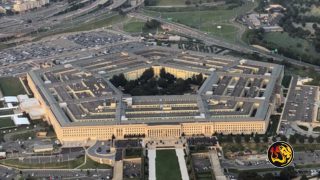
(Worthy News) – President Donald Trump has ordered the Pentagon to deploy three Navy guided-missile destroyers off the coast of South America, expanding the U.S. military’s role in combatting drug cartels and intensifying tensions with Venezuelan President Nicolás Maduro.
According to U.S. officials, the USS Gravely, USS Jason Dunham, and USS Sampson–Arleigh Burke-class destroyers equipped with Aegis missile systems–will be authorized to intercept drug shipments in waters near Venezuela and Colombia. The move shifts the Navy from its traditional support role in counternarcotics operations to direct interdiction authority.
White House press secretary Karoline Leavitt confirmed the deployment Tuesday, telling reporters, “The president is prepared to use every element of American power to stop drugs from flooding into our country and to bring those responsible to justice. The Maduro regime is not the legitimate government–it is a narco-terror cartel.”
A New Military Role in Counternarcotics
For decades, U.S. Southern Command and the Coast Guard have led drug-interdiction missions in the Caribbean and Pacific. The Pentagon has typically provided backup forces, surveillance, and intelligence. But under Trump’s directive, Navy warships will now be directly tasked with boarding and seizing cartel vessels.
Retired Adm. James Stavridis, who once commanded U.S. Southern Command, called the move “overkill” for counternarcotics but a powerful message to Maduro. “As a signal to Nicolás Maduro, the arrival off his coast of dozens of Tomahawk missiles, shore-bombardment capability, a thousand Navy sailors, and intelligence-gathering capacity is a very strong one,” Stavridis said.
Former Vice Adm. John Miller noted that while the destroyers won’t be launching missiles at smugglers, their intelligence and rapid-response teams will greatly enhance interdiction efforts. “It sends a strong signal to Maduro that his narco-terrorist assault on the U.S. will no longer be tolerated,” Miller said.
Escalating Confrontation with Maduro
The deployment follows Trump’s January executive order designating Latin American drug cartels–including Venezuela’s Tren de Aragua, El Salvador’s MS-13, and several Mexican cartels–as foreign terrorist organizations. Earlier this month, the administration doubled its bounty on Maduro to $50 million, accusing him of being one of the world’s largest narco-traffickers.
Maduro, indicted by a U.S. federal court in 2020 on narco-terrorism charges, has denied the allegations. This week, he pledged to mobilize more than 4.5 million Venezuelan militia members nationwide in response to what he called Washington’s “mad” threats. Foreign Minister Yvan Gil dismissed the U.S. accusations as “a demonstration of the failure of its policies in the region.”
The announcement comes just weeks after Washington backed Chevron’s resumption of oil operations in Venezuela, a rare easing of sanctions tied to prisoner releases and deportation agreements.
Why Venezuela Matters
Venezuela holds some of the world’s largest oil reserves and has become a critical player in U.S. regional strategy, particularly as its economic collapse under Maduro has fueled mass migration across Latin America. Washington also views Venezuela’s deepening ties to Russia, China, and Iran as a growing security threat.
Drug cartels based in Mexico, Central America, and Venezuela generate billions of dollars annually through cocaine and fentanyl trafficking to the United States. According to the Drug Enforcement Administration, their operations are a leading driver of U.S. overdose deaths and urban violence.
By deploying Navy destroyers directly into counternarcotics missions, Trump is signaling that the United States is prepared to confront both cartel networks and the Venezuelan regime that, U.S. officials argue, shelters them.
Copyright 1999-2026 Worthy News. This article was originally published on Worthy News and was reproduced with permission.
Latest News from Worthy News
Spain and neighboring Morocco reinforced security around the Spanish enclave of Ceuta after tens of thousands of migrants entered the territory illegally in recent days, while at least 34 people died attempting the dangerous crossing, authorities said Friday.

The Republican-led Senate narrowly rejected another attempt Thursday to force an end to unauthorized U.S. military operations against Iran, preserving President Donald Trump’s ability to continue the campaign without a new authorization from Congress.

Hungary’s only nuclear power plant could be forced to shut down within days after record-low water levels on the Danube River sharply reduced its cooling capacity, raising fresh concerns over Europe’s energy security amid an intense heatwave.

President Donald Trump announced Thursday that Hamas has agreed to a phased process leading to the “complete disarmament” of the terrorist organization and other armed factions in the Gaza Strip, calling the reported agreement a historic step toward lasting peace.

President Donald Trump openly questioned whether Senate Majority Leader John Thune should remain in his leadership post as tensions intensified over the Senate’s failure to advance Trump’s election-integrity agenda.

Senior U.S. intelligence officials have concluded that China’s alleged acquisition of American voter-registration data falls within the government’s definition of foreign election interference, according to information released Thursday by the White House.

The widening war between the United States and Iran entered a dangerous new phase Wednesday as American and Saudi forces carried out coordinated strikes against Iran-backed militias across Iraq, marking the first publicly acknowledged joint combat operation of its kind between Washington and Riyadh.