Listeners:
Top listeners:
-
 play_arrow



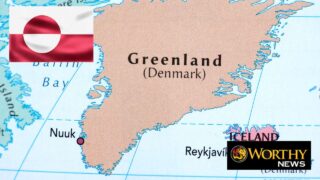
Trump Threatens Tariffs on European Allies Over Greenland Mission, Protests Erupt

by Stefan J. Bos, Worthy News Chief International Correspondent
AMSTERDAM / NUUK / COPENHAGEN (Worthy News) – Unprecedented military and trade tensions flared Saturday between Europe and the United States after U.S. President Donald J. Trump vowed to impose new tariffs on European allies sending troops to Greenland, Denmark’s vast Arctic island.
Trump said additional 10 percent import tariffs would take effect February 1 on goods from Denmark, Norway, Sweden, France, Germany, the Netherlands, Finland, and Britain—all countries already affected by earlier U.S. trade measures.
He warned the tariffs would rise to 25 percent on June 1 and remain in place until a deal is reached allowing the United States to purchase Greenland.
“Because we need Greenland for national security,” Trump said, repeating a claim that has alarmed European governments and NATO allies.
The tariffs were announced after several European countries agreed to send small military contingents to Greenland as part of preparations for a NATO exercise, following a request from Denmark, which controls the strategically important Arctic territory.
Trump has portrayed the growing European military presence as a provocation, accusing allies of playing what he called “a dangerous game.”
PROTESTS IN GREENLAND AND DENMARK
The standoff quickly triggered protests in Greenland and Denmark.
Thousands of demonstrators gathered in the Danish capital, Copenhagen, many carrying Greenlandic flags and denouncing what they described as U.S. intimidation.
“We feel a lot of solidarity—and a lot of anger about the whole situation,” one protester told reporters.
In Nuuk, crowds also took to the streets with a clear message: “Greenland is not for sale.”
“I don’t want to be American, no matter what,” one demonstrator said. “I want to be Greenlandic, no matter what.”
Some protesters marched past U.S. diplomatic buildings, holding placards labeling Trump the “tariff king” and condemning the use of trade pressure to pursue territorial ambitions.
EU AND NATO REACT
The president of the European Commission, the European Union’s executive, warned that punitive trade measures against allies risk triggering a dangerous downward spiral in transatlantic relations. President Ursula von der Leyen said the EU would remain united, stressing that Greenland’s future can only be decided by its people in line with international law.
NATO Secretary-General Mark Rutte has acknowledged that allies are discussing Arctic security and potential NATO cooperation in the region, amid heightened attention on Greenland’s strategic importance.
Rutte has emphasized that NATO allies must work together to ensure stability and security in the Arctic, while avoiding actions that could undermine cohesion within the military alliance
European officials insist the troop deployments were intended to support Arctic security and alliance readiness—not to challenge U.S. interests. Several governments have warned that unilateral tariffs against allies risk weakening NATO unity.
Analysts say Trump’s move risks entangling trade, defense, and territorial disputes into a single escalating confrontation, with Greenland—a sparsely populated but resource-rich Arctic territory—at its center.
Despite mounting tensions, European leaders have reiterated that Greenland “is not for sale” and that its future can only be determined by Greenlanders themselves.
For now, protests continue, diplomacy remains strained, and the Arctic has become the latest flashpoint in an increasingly volatile transatlantic relationship.
Copyright 1999-2026 Worthy News. This article was originally published on Worthy News and was reproduced with permission.
Latest News from Worthy News
The United States unleashed a heavy wave of airstrikes against Iran early Thursday after President Donald Trump vowed severe retaliation for Tehran’s surprise ballistic missile attack on American forces stationed in Jordan.
Christians in Nigeria were mourning Wednesday after dozens of believers were killed in coordinated attacks on villages in the country’s northwestern Kaduna State, with local monitors warning the death toll may exceed 60.

Antisemitic violence worldwide reached its deadliest level in more than three decades during 2025, according to a new report documenting a sharp escalation in threats and attacks against Jewish communities.

Israeli Prime Minister Benjamin Netanyahu said Israeli special forces could be called upon if he were threatened with arrest while traveling abroad under a warrant issued by the International Criminal Court.

Ukraine said Wednesday it struck two of Russia’s largest oil refineries in overnight long-range drone attacks, intensifying pressure on Moscow as President Volodymyr Zelenskyy met U.S. President Donald J. Trump in Washington.
Three Christian men who were detained in Pakistan for allegedly “desecrating” the Quran, viewed by Muslims as holy, have been released after police and authorities concluded the allegation “stemmed from a personal dispute rather than an act of blasphemy,” Christian advocates told Worthy News Wednesday.
Japan’s prime minister warned Wednesday that “every second counts” after a 6.8-magnitude earthquake struck the country’s southern Kumamoto Prefecture, killing more than a dozen people.