Listeners:
Top listeners:
-
 play_arrow



Armenia, Azerbaijan Sign Trump-Brokered Peace Deal, Ending Decades-Long Conflict

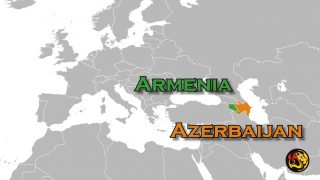
by Worthy News Washington D.C. Bureau Staff
(Worthy News) – Armenia and Azerbaijan signed a historic peace agreement at the White House on Friday, formally ending nearly four decades of territorial conflict and opening a new chapter in South Caucasus geopolitics. The accord, brokered by U.S. President Donald Trump, cements Washington’s strategic foothold in a volatile region bordering Iran and deep within the former Soviet sphere.
Trump hosted Armenian Prime Minister Nikol Pashinyan and Azerbaijani President Ilham Aliyev for what he called a “historic peace summit” in Washington. “Many leaders have tried to end the war, with no success–until now, thanks to ‘TRUMP,'” the president wrote on his social media platform.
In a rare show of unity, Aliyev and Pashinyan announced they would jointly nominate Trump for the Nobel Peace Prize.
The two nations–Shiite-majority but secular Azerbaijan, a close Israeli ally, and Christian Armenia — have been locked in a bloody dispute since the collapse of the Soviet Union, most notably over Nagorno-Karabakh. That Armenian-controlled enclave was retaken by Azerbaijan in 2023, prompting the exodus of more than 100,000 ethnic Armenians.
Although negotiators reached terms in March, the signing was delayed over Baku’s demand that Armenia amend its constitution to remove language implying territorial claims. Pashinyan, facing political headwinds at home, eventually agreed.
The ‘TRIPP’ Corridor
At the heart of the agreement is a landmark U.S. infrastructure project: the Trump Route for International Peace and Prosperity — or TRIPP. The multimodal transit corridor will connect mainland Azerbaijan with its Nakhchivan exclave through Armenia’s Syunik Province, bypassing Russia, Iran, and China.
Under the deal, the United States gains exclusive development rights to construct and operate the corridor via a new American-led consortium, while the route remains under Armenian law. This compromise resolves a long-standing dispute over Baku’s desire for an extraterritorial passage and Yerevan’s sovereignty concerns.
“What President Trump has done is he’s taken the politics out of the picture and made common sense prevail,” a senior White House official said. “The losers here are China, Russia, and Iran. The winners are the West.”
Trump is expected to sign a directive establishing a TRIPP negotiating team next week. Nine potential operators, including three American companies, have already expressed interest.
Diplomatic Setback for Moscow
The agreement represents a major strategic setback for the Kremlin, which has long regarded the South Caucasus as its backyard. Russia, tied down by its war in Ukraine, has been unable to assert its influence in the negotiations.
Bilateral Gains and Future Relations
In addition to the peace accord, the U.S. signed bilateral economic agreements with both Armenia and Azerbaijan aimed at expanding trade, energy cooperation, and infrastructure development.
Aliyev thanked Trump for lifting a 33-year-old ban on U.S.-Azerbaijani military cooperation, calling it “a day which will be remembered by the people of Azerbaijan with pride.” Pashinyan praised the deal for “unlocking strategic economic opportunities that will create long-term benefits.”
Both leaders also agreed to formally request the dissolution of the now-defunct Minsk Group, the 1992 body co-chaired by the United States, France, and Russia that sought–unsuccessfully–to resolve the Nagorno-Karabakh conflict.
“It’s been a long time–35 years they fought–and now they’re friends,” Trump said at the signing ceremony. “If you don’t get along, call me, and I’ll straighten it out.”
With the signing of the TRIPP agreement and the normalization of relations, the South Caucasus may finally see the stability that has eluded it since the Soviet collapse–while giving Washington a powerful new position in a region once dominated by Moscow.
Copyright 1999-2026 Worthy News. This article was originally published on Worthy News and was reproduced with permission.
Latest News from Worthy News

President Donald Trump said Friday that Israel was “very happy” with a newly announced agreement aimed at disarming Hamas, even as Prime Minister Benjamin Netanyahu remained publicly silent and senior Israeli officials indicated that Jerusalem had not accepted the proposal in its current form.

Spain and neighboring Morocco reinforced security around the Spanish enclave of Ceuta after tens of thousands of migrants entered the territory illegally in recent days, while at least 34 people died attempting the dangerous crossing, authorities said Friday.

The Republican-led Senate narrowly rejected another attempt Thursday to force an end to unauthorized U.S. military operations against Iran, preserving President Donald Trump’s ability to continue the campaign without a new authorization from Congress.

Hungary’s only nuclear power plant could be forced to shut down within days after record-low water levels on the Danube River sharply reduced its cooling capacity, raising fresh concerns over Europe’s energy security amid an intense heatwave.

President Donald Trump announced Thursday that Hamas has agreed to a phased process leading to the “complete disarmament” of the terrorist organization and other armed factions in the Gaza Strip, calling the reported agreement a historic step toward lasting peace.

President Donald Trump openly questioned whether Senate Majority Leader John Thune should remain in his leadership post as tensions intensified over the Senate’s failure to advance Trump’s election-integrity agenda.

Senior U.S. intelligence officials have concluded that China’s alleged acquisition of American voter-registration data falls within the government’s definition of foreign election interference, according to information released Thursday by the White House.