Listeners:
Top listeners:
-
 play_arrow



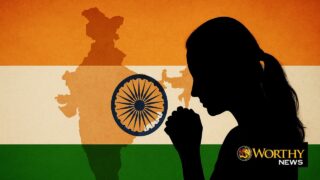
Christians In Central India Denied Burial Rights Amid Rising Hindu Nationalism

by Stefan J. Bos, Worthy News Chief International Correspondent
NEW DELHI (Worthy News) – Christians in more than 20 villages in central India were without the possibility to bury their loved ones in a dignified way on Thursday after Hindu nationalists reportedly stripped them of that right as part of a crackdown on spreading Christianity.
The move came after over 400 people from 22 villages in the Kanker district of the central Indian state of Chhattisgarh gathered on Sunday, October 5, to discuss “the growing number of conversions to Christianity in their area affecting their cultural identity, customs, and traditions,” Christians said.
“By the end of the meeting, they decided to oppose Christian burial practices and deny believers access to burial land,” confirmed advocacy group International Christian Concern (ICC).
Chhattisgarh has the second-highest number of persecution incidents in India, with another northern state, Uttar Pradesh, recording the most persecution incidents, according to Christian researchers.
“In recent months, Kanker has become the hotbed of Hindu fanaticism, with multiple tribal villages adopting violent or non-violent methods to impede Christians from practicing their religious freedom guaranteed by India’s Constitution,” ICC said.
RECONVERSION PRESSURE
The Progressive Christian Alliance, a group working for the welfare of Christians in India, said that “Deepak Yadav, a Christ follower from Banspatar village,” participated in Sunday’s gathering.
During the meeting, he was “questioned about his caste, community, religion, and conversion, and was pressured to undergo Ghar Wapsi, a ceremonial “reconversion” to Hinduism. Yadav firmly refused and was kicked out of the meeting,” the group said.
The Hindu nationalists allegedly also discussed the vandalism and destruction of church buildings and a proposal for excluding Christian communities from forest land and related properties.
Village councils “were also instructed to identify reasons for any conversions to Christianity and take prompt action against such movements,” the ICC said.
ICC noted it had previously established that six village councils in the same Kanker district “weaponized the autonomous authority granted to them by passing resolutions prohibiting the entry of Christian pastors, priests, and so-called ‘conversion agents’ in their areas.”
‘NO ENTRY’ BILLBOARDS
Giant blue billboards were reportedly erected at the entrance of these villages with warnings written in Hindi. They declared the villages “off-limits to Christian missionaries or evangelists,” citing the constitutional provisions under the Fifth Schedule and the Panchayats (Extension to Scheduled Areas) Act, 1996, also known as the PESA.
Christian advocacy groups have reportedly filed a public interest lawsuit against the billboards.
India, a predominantly Hindu nation with more than 1.4 billion people, is estimated to have around 28 to 30 million Christians, who represent about 2 percent of the population. Most Christians are found in states in southern India, the northeast, and tribal districts like Kanker.
Rights groups documented that in several tribal areas, Christian communities face restrictions on “religious gatherings, social boycotts, harassment, and denial of civil rights.” In particular, conflicts over access to burial grounds have emerged in several districts as a method of exclusion, they say.
Denial of burial rights is seen by Christians and rights advocates as a way “to impose social isolation” and reaffirm traditional religious authority in villages.
CHRISTIANS STRUGGLE
For Christian families in Kanker district, the ban on local burials means a denial of faith and being forced to travel long distances for burials, Christians suggested.
The decision by village leaders in Kanker seems part of a broader trend of increasing social pressure on minority faith communities in tribal India, Worthy News established. As the Christian faith spreads, the friction between traditional tribal customs and new religious identities intensifies.
The developments come as the Open Doors’ 2025 World Watch List ranked India 11th among 50 countries where Christians face the most severe persecution, a sharp climb from a decade ago.
In 2013, India ranked 31st, reflecting what Open Doors and other rights monitors describe as a significant deterioration in religious freedom for Christians under growing Hindu nationalism.
Critics say the rising influence of Hindu nationalist groups under Prime Minister Narendra Modi’s Bharatiya Janata Party (BJP) has led to stricter measures on “religious conversion,” especially in tribal and rural areas where Christian outreach has grown.
CONSTITUTIONAL PROMISES
Local community leaders sometimes accuse Christian missions of offering “inducements to convert”—a claim church representatives strongly reject.
Church leaders in affected areas argue that India’s Constitution guarantees freedom of religion, including the right to convert, and say that denying burial rights violates constitutional protections and basic human dignity.
They stress that the bans, billboard warnings, and pressure to reconvert are part of a larger campaign that contradicts India’s democratic values and international human rights commitments.
As tensions rise, rights groups warn that more Christians across Chhattisgarh and beyond may face social exclusion, denial of basic services, and even violence unless protections are enforced.
Copyright 1999-2026 Worthy News. This article was originally published on Worthy News and was reproduced with permission.
Latest News from Worthy News
European policymakers, church leaders and representatives of Syria’s Christian communities have urged the country’s transitional authorities to protect minority Christians amid concerns over the future of believers in the war-torn Middle East nation.

A reported Houthi attack has struck Saudi Arabia’s strategically vital East-West oil pipeline, the massive cross-country system designed to keep Saudi crude flowing even when the Strait of Hormuz is threatened or closed.

Spanish-Moroccan relations, already strained over migration, faced more pressure Friday after Spain’s lower house of parliament approved legislation that would grant Spanish citizenship to tens of thousands of Sahrawis born when Madrid administered Western Sahara.

Russia launched fresh air attacks on Ukraine early Friday after NATO reportedly confronted Russian vessels trying to sabotage undersea cables, highlighting concerns that Moscow is attempting to extend the war by targeting Europe’s critical infrastructure.
Iran-backed Houthi forces seized Yemen’s strategic Red Sea port city of Mocha, raising fears for global shipping as escalating Middle East tensions pushed oil prices above $100 a barrel.

The United States and its allies are commemorating the 25th anniversary of the worst terror attacks on American soil, which had worldwide implications ranging from wars to increased surveillance.
Several impoverished Christians have died across Pakistan in recent days amid what advocates describe as a pattern of violence, discrimination and hardship potentially threatening the Christian community throughout the predominantly Muslim nation, Christian sources told Worthy News.