Listeners:
Top listeners:
-
 play_arrow



Devout Christians In China Face New Online Crackdown (Worthy News Focus)

by Stefan J. Bos, Worthy News Chief International Correspondent
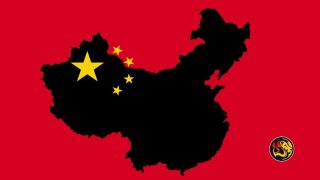
BEIJING (Worthy News) – Devout Chinese Christians seeking to spread the Gospel online face new challenges after the Communist government banned such expressions as part of a crackdown on the spread of religion through the internet.
The State Administration for Religious Affairs (SARA) published the “Code of Conduct for Religious Clergy on the Internet” this month, an 18-article regulation that prohibits the online publication of religious content not approved by the government, Worthy News documented Friday.
The rules forbid religious teaching, livestreams, online courses, and commercial promotion on social media accounts, WeChat groups, and other digital platforms unless conducted through state-authorized channels, according to official documents reviewed by Worthy News.
The code also bars the use of artificial intelligence for religious promotion — a loophole some Christian evangelists had reportedly used.
Religious leaders are required to “adhere to the Sinicization of our country’s religions, actively guide religions to adapt to socialist society, and promote religious, social, and ethnic harmony when using the Internet,” Article 3 states.
Christian observers say the measures are part of President Xi Jinping’s ongoing drive to “Sinicize” religion by aligning faiths with Communist Party ideology. Under this policy, religious organizations are expected to pledge loyalty to the state, purge “foreign” influences, and reinterpret teachings in line with socialist values.
TIGHTER IDEOLOGICAL CONTROL
“This is not a response to isolated religious phenomena but rather a systemic effort to incorporate religious activity into the broader online information management system,” an anonymous Chinese religious policy researcher told the advocacy group ChinaAid. “In the government’s view, religion may not only become an ideological ‘gray zone’ but also use online tools to expand its influence, which is precisely what they are trying to prevent and control.”
Violators face censorship, loss of clergy credentials, and possible criminal investigation, Worthy News learned.
A senior Chinese cleric told The Pillar that the new regulations also apply to those outside China. “If any cleric was caught having anything to do with a missionary, that’s ‘infiltration,’” the cleric warned. “As always with these regulations, the aim is to criminalize anything from outside China.”
Despite the risks, Christian groups continue to encourage believers inside China. Kurt Rovenstine of the U.S.-based mission organization Bibles for China urged prayers that local leaders would “have creativity and courage to know what God is leading them to do, to continue to be the spiritual leaders within China and be obedient to the Word of God and not the mandates of man.”
China has steadily tightened its grip on churches, both state-registered and underground. According to Open Doors’ World Watch List 2025, China ranks 15th among the world’s most dangerous countries for Christians — a rise of four places from the prior year.
GROWTH AMID PERSECUTION
There has been concern that religious life is under pressure in China, yet Christian organizations point to a growing number of born-again believers.
Estimates vary widely: some international researchers suggest 70 to 100 million Christians in China, while others put the number even higher. Certain advocacy groups and mission organizations say the figure could already exceed 130 million, making China one of the largest Christian populations in the world.
Observers caution that precise figures are hard to verify due to restrictions, the presence of unregistered house churches, and fear among believers of disclosing their faith.
Yet the trend suggests that Christianity continues to expand in the country of roughly 1.4 billion people, and in some cases, because of persecution.
The latest internet code underscores the Communist Party’s resolve to enclose religious expression within state boundaries. For China’s millions of Christians, it means navigating yet another tightening of both their public and digital space for faith expression.
Copyright 1999-2026 Worthy News. This article was originally published on Worthy News and was reproduced with permission.
Latest News from Worthy News
European policymakers, church leaders and representatives of Syria’s Christian communities have urged the country’s transitional authorities to protect minority Christians amid concerns over the future of believers in the war-torn Middle East nation.

A reported Houthi attack has struck Saudi Arabia’s strategically vital East-West oil pipeline, the massive cross-country system designed to keep Saudi crude flowing even when the Strait of Hormuz is threatened or closed.

Spanish-Moroccan relations, already strained over migration, faced more pressure Friday after Spain’s lower house of parliament approved legislation that would grant Spanish citizenship to tens of thousands of Sahrawis born when Madrid administered Western Sahara.

Russia launched fresh air attacks on Ukraine early Friday after NATO reportedly confronted Russian vessels trying to sabotage undersea cables, highlighting concerns that Moscow is attempting to extend the war by targeting Europe’s critical infrastructure.
Iran-backed Houthi forces seized Yemen’s strategic Red Sea port city of Mocha, raising fears for global shipping as escalating Middle East tensions pushed oil prices above $100 a barrel.

The United States and its allies are commemorating the 25th anniversary of the worst terror attacks on American soil, which had worldwide implications ranging from wars to increased surveillance.
Several impoverished Christians have died across Pakistan in recent days amid what advocates describe as a pattern of violence, discrimination and hardship potentially threatening the Christian community throughout the predominantly Muslim nation, Christian sources told Worthy News.