Listeners:
Top listeners:
-
 play_arrow



G7 Nations Not Yet Ready To Release Oil Stockpiles

By Alton Wallace | The Center Square
(Worthy News) – G7 finance ministers said Monday they will take “necessary measures” to stabilize energy supplies but added there is no plan yet to release strategic oil stockpiles after prices for the vital commodity surged over the weekend to a 45-month high.
In a teleconference with ministers early Monday, International Energy Administration executive director Fatih Birol said conditions in global oil markets have “deteriorated” as the U.S.-Israeli war with Iran entered its 10th day.
Typically, about 20% of the world’s oil supply is shipped through the Strait of Hormuz but vessel traffic through the narrow passage off the Iranian coast has all but halted since the war started. Iran has also attacked oil and gas infrastructure in neighboring countries, scoring hits on the 550,000-barrel-per-day Ras Tanura refinery in Saudi Arabia and the Ras Laffan LNG facility in Qatar, causing temporary shutdowns.
Founded in response to the 1973–1974 energy crisis, the IEA consists of 33 member countries that must maintain emergency oil reserves equal to at least 90 days of their net imports.
“IEA member countries currently hold over 1.2 billion barrels of public emergency oil stocks along with 600 million barrels of industry stocks held under government obligation,” Birol said in a statement.
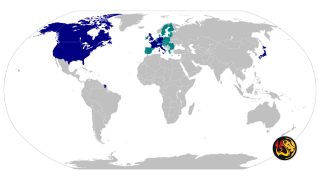
The G7, consisting of Canada, France, Germany, Italy, Japan, the United Kingdom and the U.S., together hold strategic oil reserves totaling about 1.1 billion barrels.
In a statement after the meeting, the G7 said it stood “ready to take necessary measures, including to support global supply of energy such as stockpile release.”
The disruption to energy supplies threatens to push up prices for consumers and businesses around the world, potentially cascading into sharply higher costs for food, airline tickets and other consumer goods.
President Donald Trump, in a post on Truth Social on Sunday, dismissed recent increases in oil and gas prices as “modest” and added that higher prices are a “very small price to pay” for security. Soon after the U.S. and Israel launched the first missile strikes on Iran on Feb. 28, the president projected the conflict would last 4-5 weeks.
The average U.S. price of regular grade gasoline stood at $3.478 per gallon on Monday, up 4.8 cents or by 16.3% from $2.99 per gallon in the 10 days since the war began. Benchmark West Texas Intermediate crude, the primary feedstock for a large share of the gasoline produced in the U,S., has climbed from $65.21 per barrel at the start of the conflict to settle Monday at $94.77, up 45.3% in the 10 -day period.
Trump administration officials huddled over the weekend to discuss the coordination of measures to stabilize energy prices. In an interview on Fox News on Sunday, White House Press Secretary Karoline Leavitt said the administration is taking “immediate steps” to stabilize energy flow.
Leavitt said the recent price spike is a “short-term disruption for the long-term gain” of removing the Iranian regime and ending its control over the Strait of Hormuz.
White House spokesperson Taylor Rogers said Monday that the relevant government agencies are working together on the issue because it is a top priority to the president. “President Trump and his entire energy team have had a strong game plan to keep the energy markets stable well before Operation Epic Fury began, and they will continue to review all credible options,” Rogers said.
Copyright 1999-2026 Worthy News. This article was originally published on Worthy News and was reproduced with permission.
Latest News from Worthy News

A federal appeals court has upheld the rejection of an attempt by Democratic Party leaders and campaign committees to immediately block President Donald Trump’s executive order seeking tighter citizenship-verification and mail-ballot procedures.

A scientist working for China’s military supplied coronavirus materials that were secretly carried into the United States more than a year before the COVID-19 pandemic began, according to newly released federal records.

President Donald Trump led tributes Tuesday to the late Sen. Lindsey Graham at Washington National Cathedral, remembering his longtime political ally as a towering figure in the Senate and a “true American original.”

The Senate confirmed Jay Clayton on Tuesday as President Donald Trump’s director of national intelligence, placing a permanent leader over the nation’s intelligence community after weeks of uncertainty surrounding the post.

Iran’s Islamic Revolutionary Guard Corps launched multiple ballistic missiles at American forces stationed in Jordan early Wednesday, prompting the United States and Saudi Arabia to carry out joint airstrikes against Iranian-backed militias operating inside Iraq.
Israeli Prime Minister Benjamin Netanyahu described his latest White House meeting with President Donald Trump as “one of the best” the two leaders have ever held, saying the discussions demonstrated close cooperation and a shared determination to prevent Iran from acquiring nuclear weapons.

A municipal beach worker searching Israel’s Mediterranean coastline for items lost by swimmers discovered something far older than expected: an exceptionally rare 2,500-year-old coin minted in ancient Cyprus.