Listeners:
Top listeners:
-
 play_arrow



Houthi Escalation Reaches Saudi Heartland as Mecca Receives First Warning

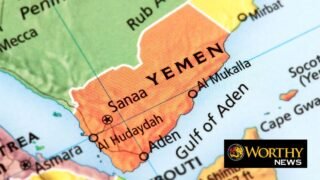
Iran-backed attacks widen the Yemen war, threaten strategic oil routes and carry possible end-times significance for some Islamic jihadists
by Emmitt Barry, Worthy News Washington D.C. Bureau Chief
RIYADH, SAUDI ARABIA (Worthy News) – Saudi authorities issued emergency warnings Tuesday in Mecca, Jeddah and Taif as expanding Houthi missile and drone attacks pushed the Yemen war deeper into the kingdom.
The warning in Mecca was the first there during the current Middle East conflict. Authorities lifted the alerts shortly afterward, with no immediate report that a projectile had struck the holy city.
The alerts followed attacks Monday against Khamis Mushait, Abha and Taif that injured 13 civilians and damaged seven homes and two vehicles, according to Saudi-led coalition spokesman Maj. Gen. Turki al-Malki.
Al-Malki accused the Iran-backed Houthis of deliberately targeting civilians and said coalition forces would respond firmly to protect Saudi sovereignty.
The Houthis claimed they launched dozens of ballistic missiles and drones against King Khalid Air Base and other targets. Some battlefield claims from both sides could not be independently verified.
Pressure on Saudi Arabia’s Oil Lifelines
The renewed attacks come after a larger Houthi assault wounded 73 people and ignited fires at Saudi oil installations and utilities.
The danger extends far beyond the Saudi-Yemen border. Houthi forces have seized the port of Mokha and advanced along Yemen’s Red Sea coast near the Bab el-Mandeb Strait, one of the world’s most important shipping passages.
Saudi Arabia has also reported that drones launched from Iraq struck its East-West Pipeline. As Worthy News previously reported, the 745-mile pipeline was built to move crude from eastern Saudi oil fields to the Red Sea port of Yanbu, allowing exports to bypass the Strait of Hormuz.
With Iran disrupting traffic through Hormuz and the Houthis threatening routes near Bab el-Mandeb, forces aligned with Tehran are applying pressure at both ends of the Arabian Peninsula.
Yemen’s Prophetic Significance
Yemen also figures in some Islamic end-times expectations.
In Twelver Shiite tradition, the Mahdi is an awaited leader who will appear to establish justice. Some accounts describe a figure known as the Yamani arising from Yemen and calling people to support the Mahdi. Other traditions place the Mahdi’s appearance in Mecca and describe an opposing army being swallowed in the desert between Mecca and Medina.
Some Shiite militants and sympathizers could interpret military victories in Yemen or advances toward Islam’s holiest cities as signs that these expectations are approaching fulfillment.
However, that possibility must be stated carefully. The Houthis emerged from Yemen’s Zaydi tradition, which is distinct from Iran’s Twelver Shiism. Their movement combines religious revivalism, Yemeni nationalism and elements of Iran’s revolutionary ideology.
No verified reporting has established that Houthi leaders launched the present campaign to fulfill the Yamani traditions or to prepare for the Mahdi. It remains a possible interpretation among religiously motivated supporters, not a proven explanation for the offensive.
Still, such beliefs matter. When fighters come to see territorial gains as evidence of a sacred mission, compromise becomes more difficult and further bloodshed easier to justify.
For Christians watching events across the Middle East, the proper response is neither sensationalism nor indifference. Scripture calls believers to remain watchful, discerning and prayerful while refusing to turn speculation into certainty.
The warning in Mecca has ended, but the conflict that produced it continues—and its military, economic and spiritual implications reach far beyond Yemen.
Copyright 1999-2026 Worthy News. This article was originally published on Worthy News and was reproduced with permission.
Latest News from Worthy News

Sabotage disrupted rail traffic across the Netherlands on Tuesday while protesting farmers set fires near highways as King Willem-Alexander opened the parliamentary year with warnings about threats to democracy and national security.
Iranian attacks have damaged or destroyed hundreds of structures at American military bases across the Middle East, according to the Pentagon inspector general’s first broad accounting of the war’s toll.

Secretary of War Pete Hegseth is facing potential impeachment after U.S. Rep. Thomas Massie, R-Ky., filed a resolution accusing him of committing high crimes and misdemeanors.
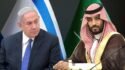
Israel has reportedly begun supplying Saudi Arabia with intelligence on Yemen’s Iran-backed Houthi movement, with the United States serving as an intermediary between the two nations.

Saudi authorities issued emergency warnings Tuesday in Mecca, Jeddah and Taif as expanding Houthi missile and drone attacks pushed the Yemen war deeper into the kingdom.
The IDF and Shin Bet announced Tuesday that they had killed Nael Abu Obeid, commander of Hamas’s Rafah Brigade, in a drone strike in the southern Gaza Strip.
The Trump administration is preparing a $2.8 billion munitions sale to Israel that would include 40,000 2,000-pound bombs, according to reports published Tuesday.