Listeners:
Top listeners:
-
 play_arrow



Hungary Plans Wealth Tax As Orbán-Era Spending Probes Widen

by Stefan J. Bos, Worthy News Europe Bureau Chief reporting from Budapest, Hungary
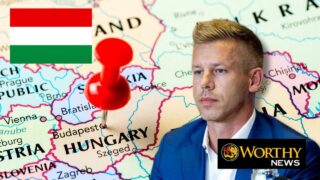
BUDAPEST, HUNGARY (Worthy News) – Hungary’s new government plans to impose an annual wealth tax on the country’s richest residents from next year as authorities widen investigations into billions of Hungarian forints in spending under former Prime Minister Viktor Orbán.
Under Prime Minister Péter Magyar’s plan, a 1 percent annual tax would be levied on net wealth exceeding 1 billion forints, roughly 2.8 million euros ($3.3 million), beginning in 2027.
The measure was among the election pledges of Magyar’s Tisza Party, which defeated Orbán’s Fidesz party in April, ending his nearly 16 consecutive years in power.
Magyar has indicated that anticipated revenue from the levy will be included in the 2027 state budget, while his government has ordered preparations for legislation introducing the tax.
Hungary’s proposal comes amid a wider European debate over whether the richest citizens should contribute more through taxes on accumulated wealth.
EUROPE DEBATES WEALTH TAXES
In the Netherlands, the government this year examined a proposal under which households worth at least 100 million euros ($117 million) would pay taxes equivalent to at least 2 percent of their net wealth annually.
The proposal, inspired by French economist Gabriel Zucman, has not yet been introduced, amid concerns that wealthy residents and capital could move abroad.
Dutch authorities have even examined ways of extending tax liability after extremely wealthy residents emigrate to countries with more favorable tax regimes to counter possible capital flight.
Yet Norway has already experienced some of the potential consequences. The country imposed an annual wealth tax and has since seen hundreds of wealthy residents leave, many relocating to Switzerland and other lower-tax jurisdictions.
More than 500 wealthy people reportedly left Norway over two years following increases in wealth taxation, with business owners accounting for a significant share of those departing.
WEALTHY LEAVE NORWAY
Norwegian real-estate entrepreneur Borger Borgenhaug, who moved to Switzerland in 2022, has said that “the political climate in Norway has become increasingly hostile to business owners.”
Supporters of Norway’s system argue, however, that the departures have not undermined the case for the levy, which continues to generate significant government revenue.
At least some economists caution that migration decisions are influenced by numerous factors, making it difficult to determine how many wealthy residents relocate specifically because of taxation.
Back in Hungary, the government proposal has divided some of the country’s wealthiest businesspeople.
Entrepreneurs Gábor Bojár, György Wáberer and Dániel Jellinek have expressed support for introducing a wealth tax, while OTP Bank chairman Sándor Csányi has questioned why so many billionaires favor the proposal.
HUNGARIAN BILLIONAIRES DIVIDED
The debate is politically charged after years of criticism that the Orbán government has overseen a small circle of extremely wealthy businesspeople with close ties to political power.
Orbán and his allies have consistently rejected allegations of systemic corruption.
The tax plans come as Hungarian authorities expand investigations into public spending under Orbán.
Police are investigating contracts involving more than 4.2 billion forints, roughly $13 million, in public money spent on Orbán’s social-media presence.
The National Bureau of Investigation launched criminal proceedings on suspicion of misappropriation after the Prime Minister’s Office filed a complaint following a review of contracts connected to the former premier’s online communications.
ORBÁN-ERA SPENDING PROBED
The contracts involved Triton Communications, owned by Orbán’s longtime press adviser Fanny Kaminski, which received more than 4.2 billion forints ($13 million) over 44 months for services including photographs, videos and social-media monitoring for the former prime minister.
Separate documents released following a freedom-of-information request by Hungarian news outlet 24.hu showed that Orbán’s government allocated or redistributed at least 500 billion forints, roughly $1.6 billion, through previously non-public government decisions.
The Prime Minister’s Office released 55 decisions signed by Orbán after determining that making them public would not harm national security or law-enforcement interests.
Most concerns were the allocation or redistribution of state funds, while other decisions remained classified.
The disclosures have added to scrutiny of state finances inherited by Magyar’s government, which came to power promising greater transparency, investigations into suspected corruption and efforts to recover public assets where wrongdoing can be established.
SECRET DECISIONS RELEASED
Authorities are also conducting a criminal investigation into state-owned Eximbank over suspected abuse of office and financial mismanagement.
Police are examining four cases, including a 1 billion euro ($1.2 billion) loan to North Macedonia that carried a 3.25 percent interest rate and a full state guarantee.
Magyar has alleged that the loan may have diverted funds intended to support Hungarian businesses to bolster a foreign political ally and potentially benefit companies close to the former government.
Investigators seized thousands of pages of documents from Hungary’s Economy Ministry as part of the Eximbank inquiry following an internal audit and complaint by the ministry.
Another case involves a 126 billion-forint ($398 million) financing guarantee for an African infrastructure project backed by Eximbank and the state-owned Hungarian Development Bank.
STATE BANK INVESTIGATED
Orbán has denied allegations of corruption.
The political shift under Magyar is also becoming visible in Hungary’s relationship with Russia after years in which Orbán maintained unusually close ties with Moscow despite Russia’s invasion of Ukraine.
Foreign Minister Anita Orbán, who is not related to the former prime minister, said Hungary was “deeply concerned” by the growing number and intensity of Russian hybrid activities on European soil. Her comments follow Germany’s accusation that Moscow was behind an attempted explosive-drone attack at Leipzig/Halle Airport near the German cities of Leipzig and Halle.
“Recent incidents in Germany demonstrate an increasingly dangerous and reckless pattern of behavior that poses a serious threat to European security and resilience,” she said.
Hungary expressed “full solidarity” with Germany and offered to cooperate in countering hybrid threats.
HUNGARY TOUGHENS RUSSIA STANCE
“In the face of these challenges, strengthening the resilience, unity and collective preparedness of the European Union and NATO is more important than ever,” the foreign minister added.
Her remarks signal a noticeably tougher approach toward Moscow than under the previous government, although Hungary remains heavily dependent on Russian energy.
Taken together, the proposed wealth tax, widening scrutiny of Orbán-era spending and tougher language toward Russia underscore how rapidly Magyar’s government is attempting to reshape Hungary after Orbán’s long rule.
Copyright 1999-2026 Worthy News. This article was originally published on Worthy News and was reproduced with permission.
Latest News from Worthy News

U.S. lawmakers are raising fresh concerns that China, Russia and other American adversaries could use electromagnetic pulse weapons to cripple the nation’s electrical grid and critical infrastructure, potentially plunging large portions of the country into darkness.

The Pentagon is turning to the Cold War-era Defense Production Act to accelerate missile manufacturing and rebuild U.S. weapons stockpiles strained by months of combat operations and years of military assistance to American allies, according to a Washington Times exclusive.

Tens of thousands of Spaniards poured into streets and public squares across the country Wednesday, protesting the government’s handling of the migrant crisis in Ceuta and demanding stronger protection of Spain’s borders.

Members of a Christian family of nine say they fear for their lives after being freed through court intervention from a brick kiln in eastern Pakistan following 11 years of alleged forced labor, beatings, threats and severely reduced wages.
Slovakia’s government of Prime Minister Robert Fico has approved joining an international commission assessing compensation claims stemming from Russia’s invasion of Ukraine, despite Moscow reportedly warning that such a move would be considered a “hostile act.”

More than a dozen members of Serbia’s influential student movement and opposition figures were targeted with sophisticated spyware ahead of parliamentary elections, according to investigators, fueling concerns about government surveillance in what researchers call the country’s largest documented wave of such spying.
Estonia’s parliament has elected constitutional lawyer and human rights ombudsman Ülle Madise as the Baltic nation’s next president as the country sharply increases defense spending amid concerns about Russia’s full-scale invasion of Ukraine.