Listeners:
Top listeners:
-
 play_arrow



Slovakia Backs Ukraine Claims Commission Despite Russian Objections

by Stefan J. Bos, Worthy News Europe Bureau Chief
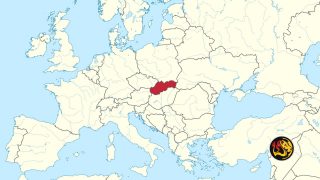
BRATISLAVA/BUDAPEST (Worthy News) – Slovakia’s government of Prime Minister Robert Fico has approved joining an international commission assessing compensation claims stemming from Russia’s invasion of Ukraine, despite Moscow reportedly warning that such a move would be considered a “hostile act.”
The decision marks an unusually critical stance toward Russia by Fico’s government, which has opposed military aid to Ukraine and sought closer relations with the Kremlin while frequently criticizing Western policies toward the war. His move is also notable given Slovakia’s continued dependence on Russian oil and natural gas.
Slovakia approved signing the convention establishing the International Claims Commission for Ukraine at a meeting Wednesday in the western Slovak city of Nitra.
The commission, established within the framework of the 46-nation Council of Europe, will review claims for compensation for damage, loss or injury caused by Russia’s actions in or against Ukraine since Moscow launched its full-scale invasion in February 2022.
Governments, individuals and companies can submit claims covering destroyed homes, infrastructure, businesses and other property.
MOSCOW OPPOSES SLOVAK MOVE
The decision followed accusations by Slovakia’s opposition Freedom and Solidarity party, known by its Slovak abbreviation SaS, that Russia warned Slovak diplomats on July 10 against joining the commission.
According to SaS, Moscow said that signing the convention would be viewed as a “hostile act.”
The opposition accused Fico of initially bowing to Russian pressure after his cabinet postponed consideration of the convention last week.
However, the prime minister rejected suggestions that Moscow had influenced his cabinet, saying there were “no obstacles” to Slovakia becoming a party to the Council of Europe convention.
Slovakia’s Foreign Ministry also called allegations of Russian interference “fabricated, unfounded and false” and insisted the country was pursuing an independent foreign policy.
FICO DEFIES EXPECTATIONS
The cabinet had delayed consideration of the convention before approving it Wednesday, saying additional information was needed about how the mechanism would operate in practice.
Fico’s turnaround is significant given his often conciliatory approach toward Moscow and strained relations with Kyiv.
Since returning to power in 2023, Fico has ended Slovak state military aid to Ukraine, criticized European sanctions against Moscow and argued that the conflict cannot be resolved militarily.
He has also met Russian President Vladimir Putin, breaking with many European Union leaders who have sought to isolate the Russian leader over the invasion.
Additionally, Slovakia continues to rely heavily on Russian oil and natural gas, making energy relations with Moscow an important economic and political issue.
HUNGARY SHIFTS RUSSIA POLICY
The Slovak move comes shortly after neighboring Hungary, in a major policy shift following the end of Viktor Orbán’s government, took a tougher stance toward Moscow.
An official Hungarian government document signed by Prime Minister Péter Magyar described Russia’s behavior as “a threat to Hungary, Europe and the global order.”
Foreign Minister Anita Orbán, who is not related to former Prime Minister Viktor Orbán, also expressed deep concern this week about the growing number and intensity of Russian hybrid activities on European soil following Germany’s accusation that Moscow was behind an attempted explosive-drone attack at Leipzig/Halle Airport.
The shift contrasts with Viktor Orbán’s government, which cultivated close Kremlin ties and frequently resisted European Union measures targeting Moscow.
Yet Hungary, like Slovakia, remains heavily dependent on Russian energy. Russian oil accounted for more than 80 percent of oil imports into both countries, according to the European Commission, the EU’s executive.
REGIONAL ENERGY TENSIONS
Slovakia has significantly reduced its dependence on Russian natural gas. Russia accounted for roughly one-third of Slovak gas imports in 2025, down from about 90 percent previously, as the country increased supplies from alternative sources.
The developments highlight the tensions facing both Central and Eastern European nations as they take tougher positions toward Moscow while remaining reliant on Russian energy supplies.
The International Claims Commission is part of a broader mechanism intended to establish Russian financial responsibility for damage caused by the war.
Its first component, the Register of Damage for Ukraine, has been collecting claims since 2024. The commission will assess evidence and determine compensation, while a separate fund is envisioned to eventually provide payments.
Its decisions will be final and not subject to appeal, although the commission will not enforce them through national courts.
PARLIAMENT MUST APPROVE
The convention was adopted in The Hague, the Netherlands, in December 2025. Dozens of countries and the European Union have signed it, while seven states and the EU have ratified it.
The commission can begin operating after the convention receives 25 ratifications and sufficient financial commitments are secured.
Slovakia’s cabinet decision does not immediately make the country a full party to the convention, with further constitutional steps required before ratification.
About 210 billion euros ($245 billion) in Russian Central Bank assets remain immobilized in the European Union, with the bloc already using proceeds generated by those assets to support Ukraine.
Russia has rejected international efforts to make it financially responsible for the war and accused the West of unlawfully targeting Russian state assets.
For Fico joining the claims mechanism highlights an increasingly difficult balancing act between maintaining relations and energy ties with Moscow while keeping Slovakia anchored in European institutions.
Copyright 1999-2026 Worthy News. This article was originally published on Worthy News and was reproduced with permission.
Latest News from Worthy News

U.S. lawmakers are raising fresh concerns that China, Russia and other American adversaries could use electromagnetic pulse weapons to cripple the nation’s electrical grid and critical infrastructure, potentially plunging large portions of the country into darkness.

The Pentagon is turning to the Cold War-era Defense Production Act to accelerate missile manufacturing and rebuild U.S. weapons stockpiles strained by months of combat operations and years of military assistance to American allies, according to a Washington Times exclusive.

Tens of thousands of Spaniards poured into streets and public squares across the country Wednesday, protesting the government’s handling of the migrant crisis in Ceuta and demanding stronger protection of Spain’s borders.

Members of a Christian family of nine say they fear for their lives after being freed through court intervention from a brick kiln in eastern Pakistan following 11 years of alleged forced labor, beatings, threats and severely reduced wages.
Slovakia’s government of Prime Minister Robert Fico has approved joining an international commission assessing compensation claims stemming from Russia’s invasion of Ukraine, despite Moscow reportedly warning that such a move would be considered a “hostile act.”

More than a dozen members of Serbia’s influential student movement and opposition figures were targeted with sophisticated spyware ahead of parliamentary elections, according to investigators, fueling concerns about government surveillance in what researchers call the country’s largest documented wave of such spying.
Estonia’s parliament has elected constitutional lawyer and human rights ombudsman Ülle Madise as the Baltic nation’s next president as the country sharply increases defense spending amid concerns about Russia’s full-scale invasion of Ukraine.