Listeners:
Top listeners:
-
 play_arrow



Latvia’s Pro-Ukraine Government Wins As Bosnia Votes On Europe’s Future

by Stefan J. Bos, Worthy News Europe Bureau Chief
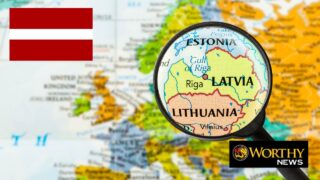
RIGA/SARAJEVO (Worthy News) – Voters in two European nations shaped by tensions involving Russia and the war in Ukraine went to the polls this weekend, with Latvia’s pro-Ukraine prime minister scoring a historic victory while Bosnia awaited results from elections that could influence its troubled path toward the European Union.
Latvian Prime Minister Andris Kulbergs appeared set to remain in power after his centrist United List won about 35.4 percent of the vote and 42 of the 100 seats in parliament, according to near-complete results.
It was the biggest parliamentary election victory by any political force since Latvia regained independence from the Soviet Union in 1991.
Kulbergs, a businessman and amateur rally driver who became prime minister in May, campaigned on strengthening national security, cutting bureaucracy and maintaining Latvia’s strong support for Ukraine.
His United List still needs coalition partners to secure a parliamentary majority, with negotiations expected to focus on other parties supporting Latvia’s pro-European orientation and membership in the NATO military alliance.
RUSSIA SECURITY CONCERNS
The election was closely watched because Latvia, a NATO and European Union member, shares borders with Russia and Moscow’s close ally Belarus and has a sizeable Russian-speaking minority.
Kulbergs has pledged to maintain defense spending at about 5 percent of gross domestic product and strengthen Latvia’s defenses against drones amid concerns that Russia’s war against Ukraine could threaten security elsewhere in the region.
Despite United List’s victory, populist parties also made gains, while voter turnout was about 51.8 percent.
Kulbergs has ruled out restoring economic dependence on Russia and has said Latvia should continue backing Ukraine against Moscow’s invasion.
About 1,500 kilometers (930 miles) to the south, Bosnians voted Sunday in elections for the country’s three-member presidency, national parliament and numerous regional institutions.
BOSNIA AWAITS RESULTS
Pre-election polling cited suggested the Party of Democratic Action (SDA) of Bosnian Muslims held a narrow national lead with 21.4 percent support, followed by the multi-ethnic Social Democratic Party (SDP) at 16.7 percent.
In the Serb-dominated Republika Srpska, the Alliance of Independent Social Democrats (SNSD), led by pro-Russian politician Milorad Dodik, was ahead with 34.2 percent.
No reliable nationwide exit poll was immediately available after voting ended Sunday, with the first preliminary official results expected to provide a clearer picture of the outcome.
The vote could influence Bosnia and Herzegovina’s stalled efforts to join the European Union as well as the competing influence of Brussels, Washington and Moscow in the Balkan nation.
About 3.4 million people were registered to vote in one of Europe’s most complicated political systems, established after the 1992-1995 Bosnian War.
DAYTON PEACE SYSTEM
The U.S.-brokered Dayton peace agreement that ended the armed conflict divided Bosnia into the mainly Serb Republika Srpska and the mainly Bosnian Muslim-Croat Federation, linked by a relatively weak central government and three-member presidency representing the country’s main ethnic communities.
Ethnically based parties continue to dominate much of the political landscape, including the Party of Democratic Action (SDA), the Serb Alliance of Independent Social Democrats (SNSD) and the Croatian Democratic Union of Bosnia and Herzegovina (HDZ BiH).
The SNSD remains associated with Milorad Dodik, who has advocated close relations with Serbia and Russia and repeatedly clashed with authorities in Sarajevo and Western officials over the powers of Republika Srpska.
Bosnia received European Union candidate status in 2022 and approval to open accession negotiations in 2024, but substantive talks have been delayed amid political disputes and the failure to implement required judicial and anti-corruption reforms.
Russia has maintained close relations with the Republika Srpska leadership, while the European Union and United States have sought to strengthen Bosnia’s ties with Western institutions.
EU MEMBERSHIP STALLED
Sunday’s voting was accompanied by new biometric voter identification and electronic ballot scanners intended to curb electoral fraud, although technical problems temporarily delayed voting at some polling stations.
Turnout was running significantly below the comparable level in the previous general election, according to election authorities.
Yet the elections also highlighted lingering nationalist tensions decades after the 1992-1995 Bosnian War killed about 100,000 people and displaced more than 2 million.
Bosnia remains divided along largely ethnic lines despite efforts to strengthen national institutions and advance integration with the European Union.
Preliminary results were expected after polls closed, potentially providing the first indication of whether Bosnia’s deeply divided political system will shift sufficiently to revive its stalled European Union membership drive.
Copyright 1999-2026 Worthy News. This article was originally published on Worthy News and was reproduced with permission.
Latest News from Worthy News
Voters in two European nations shaped by tensions involving Russia and the war in Ukraine went to the polls this weekend, with Latvia’s pro-Ukraine prime minister scoring a historic victory while Bosnia awaited results from elections that could influence its troubled path toward the European Union.
Israel has killed approximately two-thirds of the terrorists who crossed into Israel during the Hamas-led October 7, 2023 massacre, Defense Minister Israel Katz said Monday, vowing that Israeli forces will continue pursuing the roughly 2,000 perpetrators still believed to be alive.
Russia pledged Sunday to intensify strikes on Kyiv and other parts of Ukraine after Ukrainian President Volodymyr Zelenskyy vowed to increase attacks on Russian oil refineries.
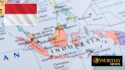
A dispute over one of Indonesia’s largest gold mines has become a symbol of President Prabowo Subianto’s drive for greater state control over the country’s vast natural resources and unease among international investors.

Britain’s Green Party has formally declared itself an “anti-Zionist party,” adopting a sweeping resolution that defines Zionism as racism and calls for the establishment of a single Palestinian state across all of historic Palestine—a policy critics say would effectively eliminate Israel as a Jewish state.

U.S. President Donald J. Trump announced Sunday the creation of a new federal “Super Intelligence Force” (SIF) for coordinating his administration’s efforts to keep the United States at the forefront of rapidly developing artificial intelligence (AI) amid broader concerns among critics that the technology could threaten humanity if not carefully handled.

Two Iranian nationals accused of plotting a terrorist attack against Britain’s Jewish community have been remanded in custody after prosecutors said they surveyed Jewish sites and planned to use a homemade explosive device.