Listeners:
Top listeners:
-
 play_arrow



Netherlands Seeks Reconciliation With Moluccans Through Historic Apology


by Stefan J. Bos, Worthy News Europe Bureau Chief
ROTTERDAM, NETHERLANDS (Worthy News) – Dutch Prime Minister Rob Jetten has apologized for what he called the “heartless and dishonorable” treatment of thousands of Moluccan soldiers and their families who were brought to the Netherlands after Indonesia gained independence, seeking to heal a decades-old wound that strained relations between the Dutch government and the Moluccan community.
The apology came as the Netherlands marked the 75th anniversary of the arrival of the first Moluccan families, whose stories remain a sensitive chapter in Dutch history.
Some 12,500 Moluccans, including about 4,000 former soldiers of the Royal Netherlands East Indies Army (KNIL) and their relatives, arrived in the Netherlands in 1951 believing their stay would be temporary.
Many had fought alongside Dutch forces during Indonesia’s struggle for independence, hoping that the Maluku Islands would eventually become an independent republic. Historians say Moluccan troops played a significant role in the Royal Netherlands East Indies Army. People familiar with that period, including relatives of former soldiers who served in Indonesia, told Worthy News that Moluccan troops earned a reputation for loyalty and military effectiveness while risking their lives in the armed conflict that ultimately gave rise to the modern Indonesian state.
However, after the Netherlands recognized Indonesian independence in 1949, those hopes were dashed, setting the stage for decades of disappointment and tension.
MOLUCCAN LEGACY
Speaking at the unveiling of a national Moluccan memorial in Rotterdam over the weekend, Jetten acknowledged the suffering endured by generations of Moluccan families.
“It is not only high time, but also necessary if we want to move forward together,” Jetten said. “Because apologies only retain their meaning through the actions that follow them.”
The soldiers were transported to the Netherlands, where they were unexpectedly dismissed from military service and housed in often poor conditions, including at the former Westerbork transit camp, from which more than 100,000 Jews, Roma, and Sinti were deported by Nazi Germany during World War Two.
Many Moluccan families never abandoned their dream of returning home. Some reportedly kept suitcases packed for years, convinced their stay in the Netherlands would be brief.
Many of the Moluccan soldiers and their families were Protestant Christians from the central Moluccas, where centuries of Dutch influence had helped shape a strong Christian community. Their faith, military service, and loyalty to the Dutch crown became central elements of an identity that many felt was neglected after their arrival in the Netherlands.
CHRISTIAN ROOTS
Jetten apologized for the soldiers’ dismissal, inadequate housing, and the “unfulfilled longing for home” that affected generations of Moluccan families.
The timing had symbolic significance. June 21 marked 75 years since the last of twelve ships carrying former Moluccan soldiers and their families arrived in Rotterdam from what was then the Dutch East Indies.
The anniversary has prompted renewed reflection on both the sacrifices made by the first generation and the hardships they endured after settling in the Netherlands.
Yet the pain did not disappear. Instead, it contributed to decades of tension between the Dutch government and parts of the Moluccan community.
The frustrations of some younger Moluccans eventually erupted into international headlines during the 1970s.
DECADES OF TENSION
In 1975, Moluccan activists hijacked a train and seized the Indonesian consulate in Amsterdam. Two years later, armed militants took dozens of hostages aboard a passenger train near the Dutch village of De Punt while others occupied a primary school in Bovensmilde.
The crises lasted for days and ended with Dutch security force interventions that left several hostages and hijackers dead.
The incidents shocked the Netherlands and became world news, drawing attention to the unresolved grievances felt by many Moluccans over broken promises and their uncertain future.
While the vast majority of Moluccans rejected violence, the dramatic actions underscored the depth of frustration among some second-generation descendants who felt the Dutch government had abandoned commitments made to their parents and grandparents.
Over subsequent decades, Dutch authorities and Moluccan representatives sought to improve relations through dialogue, cultural initiatives, employment programs, and efforts to preserve Moluccan heritage.
RECONCILIATION EFFORTS
Carola Schouten, mayor of Rotterdam, said the new memorial should serve as a place where the Moluccan story can be openly shared.
“They were treated with coldness, their loyalty had a high price, and it was often a silent sorrow,” Schouten said. “It is important that there is recognition of the injustice that was done to you.”
Historians and community leaders welcomed the apology as an important milestone, though several stressed that acknowledgment alone would not erase decades of pain.
The Rev. Jacklevyn Manuputty, an Indonesian activist, said the apology should be followed by practical measures, including addressing unresolved pension and compensation issues.
Others noted that many members of the first generation did not live long enough to hear the Dutch government’s words of regret.
COLONIAL RECKONING
The apology comes amid broader Dutch efforts to confront aspects of its colonial past.
Former Prime Minister Mark Rutte apologized in 2022 for what he called the “extreme violence” committed by Dutch forces during Indonesia’s war of independence. During a state visit to Indonesia the following year, King Willem-Alexander expressed regret for Dutch colonial-era violence. The Dutch government and the king have also acknowledged the Netherlands’ role in the transatlantic slave trade as part of a broader effort to confront difficult chapters of the nation’s past.
Today, more than 70,000 people of Moluccan descent live in the Netherlands.
For many, Jetten’s apology represents not the end of a painful chapter, but a significant step toward reconciliation between the Dutch state and a community whose loyalty, sacrifice, Christian heritage, and suffering have long remained a sensitive part of Dutch history.
Copyright 1999-2026 Worthy News. This article was originally published on Worthy News and was reproduced with permission.
Latest News from Worthy News

A proposed $300 billion investment fund for Iran included in the U.S.–Iran memorandum of understanding may face serious legal obstacles under existing U.S. sanctions law, raising questions about whether one of the agreement’s central economic promises can realistically be carried out.

Six Naga Christian men taken hostage in India’s northeastern state of Manipur, including two pastors, were found dead on June 10, with their remains reportedly mutilated, deepening fears that the region’s long-running ethnic conflict is spiraling into another deadly cycle of revenge.

Israeli Prime Minister Benjamin Netanyahu has reached an agreement with Israel’s ultra-Orthodox parties to advance key Haredi-backed legislation before the Knesset dissolves, clearing the way for a likely national election on October 20.

A Brazilian court has sentenced a mother and father to 50 days in prison for homeschooling their two daughters, a landmark ruling that has intensified concerns over parental rights, religious freedom, and the growing power of the state over family life.

Dutch Prime Minister Rob Jetten has apologized for what he called the “heartless and dishonorable” treatment of thousands of Moluccan soldiers and their families who were brought to the Netherlands after Indonesia gained independence, seeking to heal a decades-old wound that strained relations between the Dutch government and the Moluccan community.
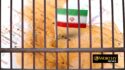
Iran’s judiciary announced that more than 3,000 citizens have been arrested in recent months on suspicion of cooperating with Israel, marking one of the regime’s broadest internal crackdowns since anti-government protests erupted earlier this year.

Latin America’s political right appeared to score another major victory Sunday as conservative political newcomer Abelardo de la Espriella, backed by President Donald Trump, declared victory in Colombia’s cliffhanger presidential runoff — a result that could mark a sharp rebuke of outgoing leftist President Gustavo Petro and further signal the region’s growing turn toward law-and-order, market-oriented leadership.