Listeners:
Top listeners:
-
 play_arrow



Rwanda Continues to Shut Down Churches Under New Standards Law

by Karen Faulkner, Worthy News Correspondent
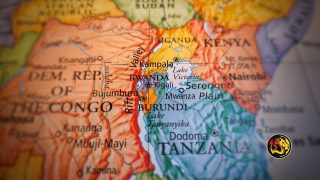
(Worthy News) – Enforcing a new law on standards for houses of worship authorities in Rwanda have conducted another round of inspections of churches and have closed down 70% of those they inspected, Baptist Global News (BGN) reports. Most churches targeted by the Rwandan government are smaller prayer houses affiliated with independent Pentecostal ministries.
In a website statement about the inspections, the Rwanda Governance Board acknowledges that the Constitution of the Republic of Rwanda guarantees freedom of worship in its article 37 but adds that this right “must be exercised in accordance with the law.”
“The law requires people to pray in a place that meets certain requirements in order to prevent them from putting their lives in danger,” the RGB statement reads. Among a variety of stipulations, some of which are onerous to small, poor congregations, churches must operate in a building that is up to code, with adequate toilets and sanitary facilities. Moreover, church leaders must have “a certificate of legal personality issued by RGB, a valid letter of collaboration with the district for their branch(es), a valid degree in theology or a degree in another domain with a valid certificate in religious studies for church managerial level.”
In a statement to BGN about the effects of the law, Rwandan Emmanuel Ntirenganya said: “The impact of the decision is already visible as most churches are closed, and worshipers — especially in rural areas — have to make a longer distance to pray from few churches that were not shut down,” he said, adding that how this affects religion in the long-term is unclear.
Noting he does not object to conditions being placed on prayer houses per se, Ntirenganya added: “I think the decision is necessary in line with having decent places of worship. But some of the requirements like soundproof in every church/house of worship are very demanding for most of those in rural areas, owing to limited financial means.”
Copyright 1999-2026 Worthy News. This article was originally published on Worthy News and was reproduced with permission.
Latest News from Worthy News
European policymakers, church leaders and representatives of Syria’s Christian communities have urged the country’s transitional authorities to protect minority Christians amid concerns over the future of believers in the war-torn Middle East nation.

A reported Houthi attack has struck Saudi Arabia’s strategically vital East-West oil pipeline, the massive cross-country system designed to keep Saudi crude flowing even when the Strait of Hormuz is threatened or closed.

Spanish-Moroccan relations, already strained over migration, faced more pressure Friday after Spain’s lower house of parliament approved legislation that would grant Spanish citizenship to tens of thousands of Sahrawis born when Madrid administered Western Sahara.

Russia launched fresh air attacks on Ukraine early Friday after NATO reportedly confronted Russian vessels trying to sabotage undersea cables, highlighting concerns that Moscow is attempting to extend the war by targeting Europe’s critical infrastructure.
Iran-backed Houthi forces seized Yemen’s strategic Red Sea port city of Mocha, raising fears for global shipping as escalating Middle East tensions pushed oil prices above $100 a barrel.

The United States and its allies are commemorating the 25th anniversary of the worst terror attacks on American soil, which had worldwide implications ranging from wars to increased surveillance.
Several impoverished Christians have died across Pakistan in recent days amid what advocates describe as a pattern of violence, discrimination and hardship potentially threatening the Christian community throughout the predominantly Muslim nation, Christian sources told Worthy News.