Listeners:
Top listeners:
-
 play_arrow



Switzerland in Shock Over Trump’s 39 Percent Tariff (Worthy News Focus)

By Stefan J. Bos, Worthy News Europe Bureau Chief
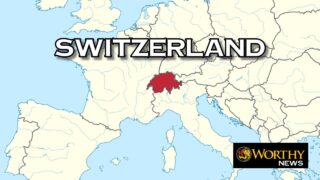
WASHINHTON/BERN/BUDAPEST (Worthy News) – Switzerland was hours away from facing the highest U.S. tariff on imports of any developed country after its president left Washington without a deal, upsetting the Alpine nation’s business elite.
Swiss President Karin Keller-Sutter rushed to the United States on Tuesday to try to persuade President Donald J. Trump not to impose 39 percent levies.
Yet she failed to clinch a deal, officials said, as the president, who wasn’t invited, did not manage to meet Trump at the White House or anywhere else before her departure from Dulles International Airport at 6:17 p.m.
As the president returned empty-handed to Switzerland, the clock was ticking toward 12:01 a.m. New York time on Thursday, when most Swiss products — from watches to chocolates — would become much more expensive.
With a 39 percent tariff, Switzerland is paying more than twice the rate of European Union member states and several other nations.
Japan, South Korea, and the European Union have rates around 15 percent unless special deals apply, while Canada faces a 35 percent tariff rate.
Earlier in the day, the Swiss leader said she met U.S. Secretary of State Marco Rubio to talk about “bilateral cooperation,” “tariffs,” and “international issues,” without elaborating.
‘FRIENDLY EXCHANGE’
“We had a very good meeting, a very friendly and open exchange about common topics and interests,” Keller-Sutter told Swiss public broadcaster SRF.
Yet her words did little to make CEOs smile again, as they fear the tariffs imposed on Switzerland will cost tens of thousands of jobs. The U.S. is its main market.
Keller-Sutter has been accused of mishandling a vital phone call last week with the White House after Donald Trump announced the shock tariff.
Local media reported that after three months of talks, negotiators believed they had secured a 10 percent tariff on exports to the U.S. — a key market for Swiss products such as luxury watches, jewelry, and chocolate, as well as machinery and pharmaceuticals.
But after a 30-minute call with Keller-Sutter last week — variously described as “bad-tempered,” “disastrous,” and “badly misjudged” — Trump imposed a levy even higher than the 31 percent he had announced on his so-called “liberation day” in April.
The risks to the Swiss economy are sizable. According to experts, a 39 percent tariff rate might reduce 1 percent of Switzerland’s gross domestic product over the medium term.
The Swiss stock market already plunged this week, prompting the cabinet to hold crisis talks and the country’s president to prepare a last-minute flight to Trump-land.
DIFFICULT TIMES
While large multinational companies have some chance of reorienting supply chains and production to cope, it’s much harder for smaller family-owned businesses.
Ypsomed Holding AG plans to move medical device production to the German city of Schwerin, where the tariff is less than half that in Switzerland.
The Burgdorf-based company isn’t alone. Across the country, executives and business owners — from large multinationals such as food giant Nestlé SA to small domestic champions — are trying to figure out how to deal with the new reality.
One high-profile consumer product affected by the Swiss tariffs is Nespresso. Though Nestlé SA sells the coffee capsules worldwide, it only produces them in Switzerland.
“The scale of the levy exceeded all expectations and caught the Swiss business elite off guard,” Bloomberg News commented.
The White House said Friday that it had made the move because Switzerland had refused to make “meaningful concessions” by dropping trade barriers.
“Switzerland, being one of the wealthiest, highest-income countries on earth, cannot expect the United States to tolerate a one-sided trade relationship,” a White House official said.
MASSIVE DEFICIT
Trump has been focused on the U.S. trade deficit with Switzerland, which was 38.5 billion Swiss francs ($48 billion) last year, according to official data.
However, Keller-Sutter said Friday that Bern would keep talking to Washington, but it could offer only limited concessions.
She noted that U.S. imports already enjoyed 99.3 percent free market access and that multiple Swiss companies “had invested heavily in the U.S.”
Switzerland has offered to buy more U.S. liquefied natural gas — as the EU has done — and to encourage Swiss companies to invest more. But Trump wasn’t impressed.
There is still some hope, as market watchers noted that Switzerland’s main export to the U.S. — pharmaceutical products worth $35 billion last year — has not yet been affected by the higher rate.
However, they warned that the unpredictable Trump may change his mind as part of his self-declared effort to move production to the United States and reduce medical costs.
Copyright 1999-2026 Worthy News. This article was originally published on Worthy News and was reproduced with permission.
Latest News from Worthy News

President Donald Trump said Friday that Israel was “very happy” with a newly announced agreement aimed at disarming Hamas, even as Prime Minister Benjamin Netanyahu remained publicly silent and senior Israeli officials indicated that Jerusalem had not accepted the proposal in its current form.
Spain and neighboring Morocco reinforced security around the Spanish enclave of Ceuta after tens of thousands of migrants entered the territory illegally in recent days, while at least 34 people died attempting the dangerous crossing, authorities said Friday.
The Republican-led Senate narrowly rejected another attempt Thursday to force an end to unauthorized U.S. military operations against Iran, preserving President Donald Trump’s ability to continue the campaign without a new authorization from Congress.
Hungary’s only nuclear power plant could be forced to shut down within days after record-low water levels on the Danube River sharply reduced its cooling capacity, raising fresh concerns over Europe’s energy security amid an intense heatwave.
President Donald Trump announced Thursday that Hamas has agreed to a phased process leading to the “complete disarmament” of the terrorist organization and other armed factions in the Gaza Strip, calling the reported agreement a historic step toward lasting peace.
President Donald Trump openly questioned whether Senate Majority Leader John Thune should remain in his leadership post as tensions intensified over the Senate’s failure to advance Trump’s election-integrity agenda.
Senior U.S. intelligence officials have concluded that China’s alleged acquisition of American voter-registration data falls within the government’s definition of foreign election interference, according to information released Thursday by the White House.