Listeners:
Top listeners:
-
 play_arrow



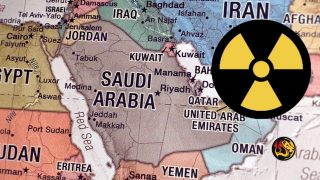
US Drops Normalization Demand in Saudi Nuclear Talks

by Emmitt Barry, Worthy News Correspondent
(Worthy News) – The United States is no longer requiring Saudi Arabia to normalize ties with Israel as a condition for progressing civil nuclear cooperation talks, according to two sources familiar with the matter who spoke to Reuters. This shift comes ahead of US President Donald Trump’s visit to the kingdom next week.
The decision to drop the normalization demand marks a significant concession by Washington. Previously, under former President Joe Biden, nuclear negotiations were part of a broader US-Saudi deal that included normalization with Israel and Riyadh’s pursuit of a defense treaty with Washington.
Saudi Arabia has consistently maintained that it will not recognize Israel without the establishment of a Palestinian state. This stance posed a significant obstacle for Biden’s attempts to expand the Abraham Accords, which were signed during Trump’s first term and included normalization between Israel and the United Arab Emirates, Bahrain, and Morocco. However, recent unrest in Gaza has further delayed progress toward Saudi-Israel normalization.
New Approach in Nuclear Cooperation
US Energy Secretary Chris Wright hinted at a possible change in direction, stating during his visit to Saudi Arabia in April that both countries were on a “pathway” to a civil nuclear agreement. “When we have something to announce, you will hear it from the President. Any reports on this are speculative,” said US National Security Council spokesman James Hewitt to Reuters.
Despite dropping the normalization prerequisite, a deal remains uncertain. One central sticking point is Section 123 of the US Atomic Energy Act, which mandates non-proliferation measures, including restrictions on uranium enrichment. Saudi Arabia’s energy minister, Prince Abdulaziz bin Salman, has expressed interest in uranium enrichment and selling the product, raising concerns.
According to one source, Saudi Arabia is still hesitant to sign a 123 agreement prohibiting enrichment or plutonium reprocessing. To address this, a potential compromise being considered is a “black box” arrangement in which only US personnel would manage a uranium enrichment facility on Saudi soil.
Saudi Arabia aims to develop nuclear power to diversify its economy and free up more crude oil for export. The kingdom’s push for nuclear capability also comes amid concerns about Iran’s nuclear ambitions. Saudi Crown Prince Mohammed bin Salman has previously stated that the kingdom would pursue nuclear weapons if Iran does the same.
Meanwhile, the US and Iran are currently negotiating over Tehran’s nuclear program. US Vice President J.D. Vance stated that the talks are progressing positively. “There is a deal to be made that would reintegrate Iran into the global economy while preventing it from acquiring a nuclear weapon,” Vance said.
Trump’s upcoming visit to Saudi Arabia will include discussions on significant economic deals, including a proposed $100 billion arms package. Additionally, Trump is urging Riyadh to increase its planned US investment package from $600 billion to $1 trillion.
This trip marks Trump’s second foreign visit since resuming office, following a brief visit to Rome for the pope’s funeral. Trump developed strong ties with Gulf states, including Saudi Arabia, during his first term. After Trump left office, the kingdom notably invested $2 billion in a company founded by Trump’s son-in-law, Jared Kushner. There are also plans to construct Trump-branded towers in Jeddah and Riyadh.
Copyright 1999-2026 Worthy News. This article was originally published on Worthy News and was reproduced with permission.
Latest News from Worthy News

Israel and Iran-backed Hezbollah have agreed to a ceasefire that was to begin Friday afternoon, Worthy News learned.

At least 10 people, including four children, were injured in a Russian strike on Ukraine’s northeastern Kharkiv region, Ukrainian authorities said Friday. In southern Ukraine, the State Emergency Service reported that one person was killed and four others were injured in a separate Russian attack on the Odesa region.

President Donald Trump signed the temporary peace deal with Iran ahead of schedule Wednesday at the Palace of Versailles in France, kicking off negotiations over a final nuclear deal.
Iran’s Supreme Leader Mojtaba Khamenei’s statement following the signing of a memorandum of understanding with the United States is being viewed by analysts not as an embrace of peace, but as a carefully crafted declaration that preserves Tehran’s revolutionary posture while allowing the regime to regroup.
The United States imposed new sanctions Thursday on individuals and entities linked to Hezbollah, accusing them of using political and financial influence to obstruct Lebanon’s peace process and delay the Iran-backed group’s disarmament.
Ukraine launched one of its largest drone attacks on Moscow since the war began, hitting a key oil refinery and other targets around the Russian capital, leaving at least one person dead and numerous others injured, Russian officials said.

Russian President Vladimir Putin hosted Southeast Asian leaders in Kazan this week as Moscow moved to deepen ties with the Association of Southeast Asian Nations and promote its vision of a “multipolar world order” aimed at countering U.S. global dominance.