Listeners:
Top listeners:
-
 play_arrow



Visegrád Nations Meet As EU Debates New Safeguards For Future Members

by Stefan J. Bos, Worthy News Europe Bureau Chief
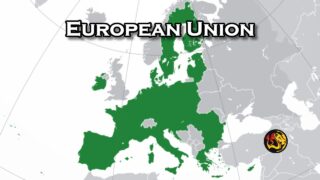
BRUSSELS/BUDAPEST (Worthy News) – The leaders of Hungary, Poland, the Czech Republic, and Slovakia are expected to meet this month amid growing debate within the European Union over how future member states should be admitted and monitored.
The gathering of the four Central European nations, known as the Visegrád Group (V4), comes as the EU considers introducing new safeguards for candidate countries seeking membership.
Several member states have proposed temporary limits on certain voting rights for new members and stronger mechanisms to ensure adherence to democratic standards and the rule of law.
The proposals reflect concerns among some governments over democratic backsliding within the bloc and the challenges posed by future enlargement.
EU CONSIDERS NEW ACCESSION RULES
Germany, France, the Netherlands, Belgium, and Luxembourg outlined their concerns in a joint paper, arguing that the EU should prepare for a possible expansion that could include Montenegro, Albania, Ukraine, and Moldova in the coming years.
Montenegro hopes to join the bloc by 2028, while Albania, Ukraine, and Moldova are seeking to advance their accession bids.
The five countries proposed additional safeguards that could be incorporated into future accession treaties, including a monitoring mechanism and provisions allowing action against serious backsliding in areas such as democracy, judicial independence, and media freedom.
“The EU should have an in-depth discussion on the possibility of temporary, transitional limitations of voting rights for new Member States, in particular parts of the EU acquis where unanimity is required,” the paper stated.
DEBATE OVER VOTING RIGHTS
The proposal highlighted areas such as EU enlargement, foreign policy, and budget decisions, where unanimous approval by all member states is currently required.
Supporters argue that such safeguards could help prevent institutional deadlock as the bloc grows, while critics warn they could create a two-tier membership structure.
The debate has gained urgency as the EU accelerates preparations for possible enlargement toward Eastern Europe and the Western Balkans.
Cyprus, which currently holds the rotating presidency of the Council of the European Union, said it has begun preparations to open negotiations with Ukraine and Moldova on the first cluster of chapters dealing with democratic standards and the rule of law.
UKRAINE PUSHES FOR MEMBERSHIP
Estonian Prime Minister Kristen Michal voiced strong support for Ukraine’s European aspirations after meeting Ukrainian President Volodymyr Zelenskyy in Tallinn.
“Ukraine belongs in the EU. All six accession clusters should be opened without delay. NATO must remain on the table as the strongest security guarantee,” Michal wrote on social media platform X.
Meanwhile, Hungarian officials said progress had been made in talks with Ukraine regarding the rights of the ethnic Hungarian minority living in the Transcarpathian region.
According to Hungarian officials, Ukraine agreed to restore the system of minority-language schools and guarantee the use of the Hungarian language, along with national symbols such as the Hungarian flag and anthem.
HUNGARY LINKS SUPPORT TO MINORITY RIGHTS
Hungarian officials said the agreement would also allow broader use of Hungarian in healthcare, cultural events, scientific conferences, and election campaigning in settlements where ethnic Hungarians account for more than 10 percent of the population.
The measures form part of an action plan linked to Ukraine’s EU accession process.
Separately, Hungary has indicated that further progress in Ukraine’s accession negotiations will depend on the implementation of these commitments.
The issue is expected to feature prominently during upcoming Visegrád Group discussions, alongside talks on regional cooperation, EU enlargement, and the future direction of the European Union.
Copyright 1999-2026 Worthy News. This article was originally published on Worthy News and was reproduced with permission.
Latest News from Worthy News
North Korean leader Kim Jong Un marked the 73rd anniversary of the Korean War armistice by paying tribute at war memorials and cemeteries, accompanied for the first time by his daughter, Ju Ae, in a move that analysts say further underscores her increasingly prominent public role.
President Donald Trump said Monday that Iran is seeking negotiations after two weeks of sustained American airstrikes, portraying Tehran’s diplomatic outreach as evidence that the U.S. military campaign has forced the Islamic regime back to the bargaining table.

President Donald Trump and three Republican senators are pressing Senate Majority Leader John Thune to keep the chamber in session through August until lawmakers pass the SAVE America Act, escalating a growing dispute over one of the president’s top election-integrity priorities.

President Donald Trump announced Sunday that Morocco was naming a major Atlantic expressway in his honor, drawing renewed attention to a sweeping infrastructure project linking the kingdom’s southern regions with the disputed territory of Western Sahara.

Israeli Prime Minister Benjamin Netanyahu departed for Washington on Monday ahead of a closely watched meeting with U.S. President Donald Trump, saying Iran and efforts to expand regional peace agreements would be at the center of the discussions. Netanyahu left Israel from Nevatim Airbase after an unexplained delay under heightened security precautions.

Syrian President Ahmed al-Sharaa said Damascus is seeking a security agreement with Israel that could eventually open the door to broader peace talks, declaring that his government has no interest in entering another military confrontation with the Jewish state.
Iranian Supreme Leader Mojtaba Khamenei has openly called for continued “jihad and resistance” against Israel and the United States while declaring the defense of Hezbollah a strategic obligation of the Islamic Republic.