Listeners:
Top listeners:
-
 play_arrow



Canada Welcomes Historic EU ‘Associate Membership’ Offer Despite Trump Threats

by Stefan J. Bos, Worthy News Europe Bureau Chief
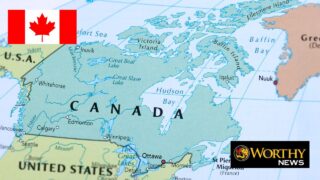
BRUSSELS/BUDAPEST (Worthy News) – Canadian Prime Minister Mark Carney has welcomed an unprecedented proposal for Canada to become the European Union’s first “associate member” despite threats of economic retaliation from U.S. President Donald J. Trump.
President Trump criticized the proposed arrangement, calling the prospect of Canada becoming an EU associate member “laughable” and warning that Washington could impose “very serious tariffs” if it viewed the move as hostile.
“If it’s a good intention, that’s fine. If it’s a bad intention, we’ll put very heavy tariffs on Europe,” Trump told reporters.
Ottawa is neither seeking full EU membership nor willing to surrender its sovereignty, Carney told the European Parliament in Strasbourg on Thursday, a day after European Commission President Ursula von der Leyen proposed the unprecedented arrangement during her annual State of the Union address.
“Canada is not in a position nor seeking to become a full member of the European Union,” Carney said. “Therefore, it’s a different framework. It’s a framework that is relevant for a country that shares deep bonds with Europe.”
SOVEREIGNTY REMAINS CENTRAL
The proposed “associate membership” would create a new relationship with the 27-nation bloc. The concept has yet to be fully defined, and its precise legal and institutional structure remains unclear.
Carney said the precise terminology mattered less than the substance of a closer partnership, stressing that Canada would determine its own international relationships.
He made clear that any agreement would have to preserve Canada’s independence, saying Ottawa seeks partnerships “that are complementary, that reinforce our sovereignty.”
Carney also pointed to polling showing strong Canadian support for closer relations with Europe as his government seeks to diversify the country’s international partnerships.
Canada’s turn toward Europe comes amid deteriorating trade relations with the United States after bilateral negotiations collapsed. The United States remains by far Canada’s largest export market.
DEEPENING EUROPEAN TIES
Carney has increasingly sought closer cooperation with Europe, arguing that democracies and middle powers should work together in an increasingly fragmented international order.
In Strasbourg, he identified critical minerals, defense industrial capacity, artificial intelligence and computing, energy security, space and payment systems as areas where Canada and the EU could deepen cooperation.
“An alliance is not defined by what we oppose, but by what we are for: freedom, solidarity, prosperity, sustainability,” Carney told European lawmakers.
He also stressed that he was not proposing the creation of a third geopolitical power bloc to compete with the United States, China or other major powers.
“We do not seek power to dominate others,” Carney said, arguing instead that Canada and Europe should strengthen their resilience so that other powers cannot control their markets, impair their sovereignty, threaten their territorial integrity or undermine their freedoms, democracies and rule of law.
ALLIANCE FOR FUTURE
Von der Leyen has proposed building an “Alliance for the Future” that would expand cooperation beyond the existing EU-Canada relationship into areas including defense, energy and technology.
European Parliament President Roberta Metsola said Europe and Canada have significant potential to deepen cooperation in areas ranging from defense and trade to energy, education and research.
For now, however, Canada’s proposed associate membership remains a political concept rather than an established EU legal status, with its precise rights, obligations and institutional structure still to be determined.
Carney portrayed closer cooperation as a way for Canada and Europe to protect their prosperity, democratic institutions and strategic independence in a changing global order.
“Canada and Europe are stronger together,” he told European lawmakers.
Copyright 1999-2026 Worthy News. This article was originally published on Worthy News and was reproduced with permission.
Latest News from Worthy News

The U.N. General Assembly voted Thursday to let Palestinian Authority President Mahmoud Abbas address next week’s gathering by video after the United States denied him a visa for the second year in a row. The measure passed 152–3, with four abstentions. The United States, Israel and Paraguay voted against it.

The State Department has approved a possible $24.3 billion sale of 48 F-35 fighter jets to Saudi Arabia, bringing the kingdom closer to acquiring one of America’s most advanced warplanes.

For decades, St. Peter’s Evangelical Church in central Tehran was more than a sanctuary. Its ten-acre compound held homes, two schools and offices tied to Iran’s Protestant community. Now the church is closed, its residents have been evicted, and guards have been posted to keep worshippers from returning.

Two figures in the latest Census Bureau report offer a clear sign of economic progress: American households earned more, and a smaller share of the country lived in poverty in 2025.
Canadian Prime Minister Mark Carney has welcomed an unprecedented proposal for Canada to become the European Union’s first “associate member” despite threats of economic retaliation from U.S. President Donald J. Trump.

A Hungarian television and radio presenter has been fired after failing to immediately cut off a live caller who suggested using a sniper to “eliminate” Prime Minister Péter Magyar, amid wider concerns over violent political rhetoric in Hungary.

Russia’s attack drones are getting faster, and Ukraine’s defenders are being forced to adapt. New Geran models use turbojet engines instead of the propellers carried by earlier drones, shortening the time between an air-raid warning and a possible strike.