Listeners:
Top listeners:
-
 play_arrow


Iran Seizes Historic Tehran Church as UN Experts Demand Answers


The loss of St. Peter’s has displaced Christian families and closed a place of worship, even as reports point to a growing underground church.
by Emmitt Barry, Worthy News Washington D.C. Bureau Chief
(Worthy News) – For decades, St. Peter’s Evangelical Church in central Tehran was more than a sanctuary. Its ten-acre compound held homes, two schools and offices tied to Iran’s Protestant community. Now the church is closed, its residents have been evicted, and guards have been posted to keep worshippers from returning.
Two United Nations experts are demanding an explanation. In a July 10 letter to Iran, special rapporteurs Mai Sato and Nazila Ghanea questioned the legal basis for transferring the property to a state organization under a 1998 court ruling. They also asked what protection had been offered to the 27 residents from 20 Armenian and Assyrian Christian families who were ordered to leave.
The letter was written before the final eviction. After it became public in September, the experts told the religious freedom group Article18 that the families had been forced out and that Iran had not answered their questions. Iranian authorities have not publicly provided an explanation in the material reviewed for this report.
St. Peter’s is Iran’s oldest Protestant church. Its seizure reaches beyond one congregation. The UN experts described a decades-long pattern of church closures and property confiscations, with a particular toll on Christians who worship in Persian. They said Iran once had roughly 50 Protestant churches offering Persian-language services; today, effectively none remain open for that purpose.
The UN experts have called on Iran to explain the seizure and protect the rights of St. Peter’s congregation and former residents. For the families who lived there, the question is immediate: whether they can return home. For Iran’s wider Christian community, it is whether faith can be lived and shared without fear.
Iran’s Underground Church Grows as Believers Look to the Restoration of Elam
Despite being one of the most tightly controlled Islamic nations on earth, one of the fastest-growing churches in the world is not rising beneath steeples, but behind closed doors.
Across Iran, thousands of Christian converts are meeting quietly in house churches, often under threat of surveillance, arrest, imprisonment, and even death. Yet the underground church continues to grow, with reports from Christian ministries describing a remarkable movement of Iranians turning to Jesus Christ despite increasing pressure from the regime.
For many believers watching the current war and turmoil surrounding Iran, the growth of the Persian church carries deep prophetic weight. The ancient region of Elam, located in what is now southwestern Iran, is specifically named in Jeremiah 49. The prophecy speaks first of judgment, scattering, and the breaking of Elam’s power — but it does not end there.
“Yet I will restore the fortunes of Elam in the latter days,” the Lord declares in Jeremiah 49:39.
That promise has stirred many Bible students to see more than headlines in Iran’s unrest. While the Islamic Republic projects power through militias, missiles, and regional warfare, another story is unfolding beneath the surface: Iranians are coming to faith in Christ in extraordinary numbers.
This does not mean every military development involving Iran should be declared an immediate fulfillment of prophecy. Scripture calls for humility, not speculation. But the contrast is striking. As Iran’s rulers rage against Israel and the West, many within Iran are quietly turning toward the God of Israel and the Messiah of Israel.
The same land once associated with Elam’s judgment may now be witnessing the beginning of its restoration — not first through politics, but through salvation.
In the shadow of war, persecution, and shaking, the Gospel is moving. And in Iran, the church is proving once again that the Kingdom of God often advances most powerfully where earthly kingdoms feel most secure.
Copyright 1999-2026 Worthy News. This article was originally published on Worthy News and was reproduced with permission.
Latest News from Worthy News
The U.N. General Assembly voted Thursday to let Palestinian Authority President Mahmoud Abbas address next week’s gathering by video after the United States denied him a visa for the second year in a row. The measure passed 152–3, with four abstentions. The United States, Israel and Paraguay voted against it.
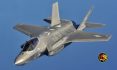
The State Department has approved a possible $24.3 billion sale of 48 F-35 fighter jets to Saudi Arabia, bringing the kingdom closer to acquiring one of America’s most advanced warplanes.

For decades, St. Peter’s Evangelical Church in central Tehran was more than a sanctuary. Its ten-acre compound held homes, two schools and offices tied to Iran’s Protestant community. Now the church is closed, its residents have been evicted, and guards have been posted to keep worshippers from returning.

Two figures in the latest Census Bureau report offer a clear sign of economic progress: American households earned more, and a smaller share of the country lived in poverty in 2025.

Canadian Prime Minister Mark Carney has welcomed an unprecedented proposal for Canada to become the European Union’s first “associate member” despite threats of economic retaliation from U.S. President Donald J. Trump.

A Hungarian television and radio presenter has been fired after failing to immediately cut off a live caller who suggested using a sniper to “eliminate” Prime Minister Péter Magyar, amid wider concerns over violent political rhetoric in Hungary.

Russia’s attack drones are getting faster, and Ukraine’s defenders are being forced to adapt. New Geran models use turbojet engines instead of the propellers carried by earlier drones, shortening the time between an air-raid warning and a possible strike.