Listeners:
Top listeners:
-
 play_arrow



IDF Establishes “Yellow Line” Buffer Zone in Southern Lebanon Amid Ceasefire


by Emmitt Barry, Worthy News Washington D.C. Bureau Chief
(Worthy News) – The Israel Defense Forces (IDF) confirmed Saturday that it has established a “Yellow Line” security perimeter across southern Lebanon, creating a controlled buffer zone during the current 10-day ceasefire. The move is aimed at maintaining operational security while preventing renewed hostilities along Israel’s northern border.
The military framework, modeled after similar security zones previously implemented in Gaza, designates captured areas south of the line as closed military zones. As a result, approximately 55 Lebanese villages have been declared off-limits to civilians, with residents barred from returning in order to safeguard Israeli forces operating in the region.
Despite the ceasefire agreement, the IDF reported multiple incidents in which suspected terrorists violated its terms. According to military officials, individuals approached Israeli positions from the north in ways deemed threatening, prompting immediate defensive action. In response, the Israeli Air Force and ground units carried out targeted strikes, supported by artillery fire, to neutralize the threats. Several infrastructure sites believed to be used in these incursions were also destroyed.
Under the “Yellow Line” policy, the IDF continues to operate freely within the buffer zone, focusing on the systematic dismantling of Hezbollah infrastructure. This includes clearing tunnels and eliminating launch sites that could be used in future attacks. Israeli officials say the strategy is designed to prevent a resurgence of violence and ensure long-term security for northern Israeli communities.
While questions remain about whether the ceasefire fully guarantees safety for Israeli residents near the border, military leaders maintain that the buffer zone provides a necessary layer of defense during this fragile pause in fighting.
Prophetic Perspective: Could Developments in Lebanon Signal the “Latter Rain” Season?
As Israel signals the possibility of expanding its control into southern Lebanon, some prophecy watchers are carefully observing what such a move could represent—not only geopolitically, but spiritually.
Scripture speaks of a future season of outpouring, often referred to as the “latter rain” or malkosh. In Zechariah 10:1, the prophet calls on God’s people to ask the Lord for rain in the time of the latter rain, pointing to a divinely appointed moment when God would pour out His Spirit in preparation for a great harvest.
In the same prophetic context, Zechariah describes a regathering of the Jewish people:
“I will whistle for them and gather them… I will bring them into the land of Gilead and Lebanon, until no more room is found for them” (Zechariah 10:8–10).
This passage is striking, as it specifically mentions not only Israel proper, but also Lebanon and Gilead as part of the overflow of restoration. The imagery is one of abundance—so many returning that the land itself struggles to contain them.
Another prophetic reference appears in Obadiah 1:20, which declares:
“The captives of this host of the children of Israel shall possess the land of the Canaanites as far as Zarephath.”
Zarephath is historically identified along the Lebanese coast, between Sidon and Tyre—modern-day Lebanon. This suggests a future expansion of habitation or influence tied to Israel’s restoration.
Taken together, these passages point to a sequence: regathering, expansion, and ultimately the establishment of the Kingdom under the Lord’s authority.
Whether current military developments directly align with these prophecies remains to be seen. However, the convergence of Israel, Lebanon, and increasing global tension is drawing renewed attention from those who study the prophetic Scriptures.
For many, the key takeaway is not merely territorial—but spiritual. The same passages that speak of regathering also point to an outpouring of God’s Spirit. If the malkosh season is indeed approaching, it would signify not just conflict in the region, but the beginning of a global harvest unlike anything seen before.
In that light, events unfolding in the Middle East may serve as both a warning and an invitation—calling hearts to readiness in what many believe could be a pivotal moment in redemptive history.
Copyright 1999-2026 Worthy News. This article was originally published on Worthy News and was reproduced with permission.
Latest News from Worthy News

The U.N. General Assembly voted Thursday to let Palestinian Authority President Mahmoud Abbas address next week’s gathering by video after the United States denied him a visa for the second year in a row. The measure passed 152–3, with four abstentions. The United States, Israel and Paraguay voted against it.
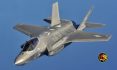
The State Department has approved a possible $24.3 billion sale of 48 F-35 fighter jets to Saudi Arabia, bringing the kingdom closer to acquiring one of America’s most advanced warplanes.

For decades, St. Peter’s Evangelical Church in central Tehran was more than a sanctuary. Its ten-acre compound held homes, two schools and offices tied to Iran’s Protestant community. Now the church is closed, its residents have been evicted, and guards have been posted to keep worshippers from returning.

Two figures in the latest Census Bureau report offer a clear sign of economic progress: American households earned more, and a smaller share of the country lived in poverty in 2025.

Canadian Prime Minister Mark Carney has welcomed an unprecedented proposal for Canada to become the European Union’s first “associate member” despite threats of economic retaliation from U.S. President Donald J. Trump.

A Hungarian television and radio presenter has been fired after failing to immediately cut off a live caller who suggested using a sniper to “eliminate” Prime Minister Péter Magyar, amid wider concerns over violent political rhetoric in Hungary.

Russia’s attack drones are getting faster, and Ukraine’s defenders are being forced to adapt. New Geran models use turbojet engines instead of the propellers carried by earlier drones, shortening the time between an air-raid warning and a possible strike.