Listeners:
Top listeners:
-
 play_arrow



Israel Announces ‘Next Phase’ of War as Airstrikes Expand Across Iran


by Emmitt Barry, Worthy News Washington D.C. Bureau Chief
(Worthy News) – Israel signaled a major escalation in its war against Iran on Thursday as the Israeli Air Force struck the Parchin military complex near Tehran, part of what military leaders describe as the “next phase” of the campaign aimed at dismantling Iran’s military capabilities.
The strike targeted one of Iran’s most sensitive defense industry sites, where facilities produce and store missile warheads, engines, and other components used in Tehran’s expanding missile and munitions programs. The complex, located about 30 kilometers southeast of Tehran, has long been viewed by Western intelligence agencies as a critical hub in Iran’s military infrastructure.
Israeli officials say the attack reflects a broader strategic shift in the war. After establishing air superiority over large parts of Iran, Israeli and U.S. forces are now focusing on systematically dismantling the Islamic Republic’s military production chain—from weapons factories and missile storage depots to launch systems and command structures.
Under the strategy, Israeli and American forces aim to disrupt the entire lifecycle of Iran’s weapons programs. That includes striking production plants, underground storage facilities, missile launchers, and the commanders and units responsible for deploying them.
The Parchin strike underscores the new phase of operations, which Israeli leaders say will increasingly target the foundations of Iran’s military-industrial network. U.S. strategic bombers capable of penetrating deeply buried facilities are also expected to play a role in upcoming operations aimed at crippling Iran’s long-term ability to manufacture advanced weapons.
The escalation comes as Israel and its allies seek to weaken what they describe as the world’s leading state sponsor of terrorism and reduce Tehran’s capacity to threaten Israel and destabilize the region.
Copyright 1999-2026 Worthy News. This article was originally published on Worthy News and was reproduced with permission.
Latest News from Worthy News

The U.N. General Assembly voted Thursday to let Palestinian Authority President Mahmoud Abbas address next week’s gathering by video after the United States denied him a visa for the second year in a row. The measure passed 152–3, with four abstentions. The United States, Israel and Paraguay voted against it.
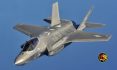
The State Department has approved a possible $24.3 billion sale of 48 F-35 fighter jets to Saudi Arabia, bringing the kingdom closer to acquiring one of America’s most advanced warplanes.

For decades, St. Peter’s Evangelical Church in central Tehran was more than a sanctuary. Its ten-acre compound held homes, two schools and offices tied to Iran’s Protestant community. Now the church is closed, its residents have been evicted, and guards have been posted to keep worshippers from returning.

Two figures in the latest Census Bureau report offer a clear sign of economic progress: American households earned more, and a smaller share of the country lived in poverty in 2025.

Canadian Prime Minister Mark Carney has welcomed an unprecedented proposal for Canada to become the European Union’s first “associate member” despite threats of economic retaliation from U.S. President Donald J. Trump.

A Hungarian television and radio presenter has been fired after failing to immediately cut off a live caller who suggested using a sniper to “eliminate” Prime Minister Péter Magyar, amid wider concerns over violent political rhetoric in Hungary.

Russia’s attack drones are getting faster, and Ukraine’s defenders are being forced to adapt. New Geran models use turbojet engines instead of the propellers carried by earlier drones, shortening the time between an air-raid warning and a possible strike.