Listeners:
Top listeners:
-
 play_arrow



Israel Intensifies Campaign to Dismantle Hezbollah as Northern Fighting Escalates

by Emmitt Barry, Worthy News Washington D.C. Bureau Chief
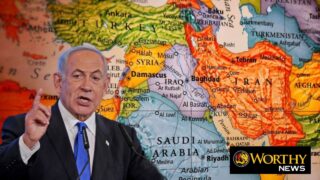
JERUSALEM (Worthy News) – Israeli Prime Minister Benjamin Netanyahu said Israel is now actively focused on “dismantling Hezbollah” as part of its broader campaign against Iran, declaring the military effort remains “in full swing” despite reports suggesting otherwise.
Speaking via videoconference to ministry officials and northern community leaders, Netanyahu stated that Israeli forces have already removed much of Hezbollah’s rocket threat and neutralized the group’s planned ground invasion capabilities. He said these operations have effectively created a “security buffer” beyond Israel’s northern border with Lebanon.
The prime minister indicated that Israel intends to expand this buffer zone further, aiming to push anti-tank missile threats farther from northern towns. He also pledged increased government funding to rebuild affected communities in the Galilee region.
“The situation has fundamentally changed,” Netanyahu said, emphasizing that Israel is now “stronger than ever” while Iran and its proxies are significantly weakened.
Despite these gains, fighting has sharply intensified. According to Israeli military sources, Israel Defense Forces reported that Hezbollah launched more than 600 attacks within a 24-hour period—roughly double the group’s previous peak during earlier phases of the conflict. Most of the rockets, mortars, and drones targeted Israeli troops operating inside southern Lebanon rather than civilian areas.
Military analysts suggest the surge in attacks may reflect Hezbollah’s attempt to influence ceasefire negotiations or pressure Israel into withdrawing from southern Lebanon. However, officials believe the current pace of fire is unlikely to be sustainable over time.
Rafi Milo confirmed that Israeli forces have killed approximately 750 Hezbollah fighters since the conflict escalated, a sharp increase from earlier estimates. Still, Israel appears prepared to continue its operations, including sustained airstrikes and a potential extended ground presence.
Israeli leaders are increasingly signaling that troops may remain in southern Lebanon up to the Litani River for an extended period in an effort to force Hezbollah’s disarmament—something the group has repeatedly refused, even under pressure from the Lebanese government following a prior ceasefire in late 2024.
The evolving battlefield dynamics present a complex challenge. As Israeli forces push deeper into southern Lebanon, they reduce Hezbollah’s ability to strike Israeli civilian centers by forcing rocket units farther north. At the same time, this advance places Israeli troops closer to Hezbollah’s frontline positions, increasing their exposure to direct attacks.
That danger was underscored by the death of IDF Sgt. Aviaad Elchanan Volansky, a 21-year-old tank operator from Jerusalem, who was killed when an anti-tank missile struck his unit during operations. The missile was fired from north of the Litani River, highlighting that Hezbollah retains operational reach even in areas where its presence has been reduced.
While ceasefire discussions tied to the broader Israel-Iran conflict continue, Israel’s latest moves suggest a determination to reshape the security landscape in the north—potentially for the long term.
Copyright 1999-2026 Worthy News. This article was originally published on Worthy News and was reproduced with permission.
Latest News from Worthy News

The U.N. General Assembly voted Thursday to let Palestinian Authority President Mahmoud Abbas address next week’s gathering by video after the United States denied him a visa for the second year in a row. The measure passed 152–3, with four abstentions. The United States, Israel and Paraguay voted against it.
The State Department has approved a possible $24.3 billion sale of 48 F-35 fighter jets to Saudi Arabia, bringing the kingdom closer to acquiring one of America’s most advanced warplanes.

For decades, St. Peter’s Evangelical Church in central Tehran was more than a sanctuary. Its ten-acre compound held homes, two schools and offices tied to Iran’s Protestant community. Now the church is closed, its residents have been evicted, and guards have been posted to keep worshippers from returning.

Two figures in the latest Census Bureau report offer a clear sign of economic progress: American households earned more, and a smaller share of the country lived in poverty in 2025.

Canadian Prime Minister Mark Carney has welcomed an unprecedented proposal for Canada to become the European Union’s first “associate member” despite threats of economic retaliation from U.S. President Donald J. Trump.

A Hungarian television and radio presenter has been fired after failing to immediately cut off a live caller who suggested using a sniper to “eliminate” Prime Minister Péter Magyar, amid wider concerns over violent political rhetoric in Hungary.

Russia’s attack drones are getting faster, and Ukraine’s defenders are being forced to adapt. New Geran models use turbojet engines instead of the propellers carried by earlier drones, shortening the time between an air-raid warning and a possible strike.