Listeners:
Top listeners:
-
 play_arrow



Netanyahu Hails Trump Meeting as Leaders Unite Against Nuclear-Armed Iran

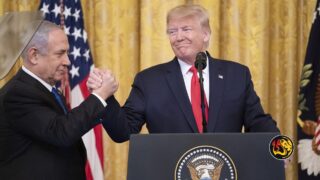
Israeli and U.S. leaders reaffirm “ironclad” commitment to stopping Tehran while weighing the next phase of the regional campaign
by Emmitt Barry, Worthy News Washington D.C. Bureau Chief
WASHINGTON, D.C. (Worthy News) – Israeli Prime Minister Benjamin Netanyahu described his latest White House meeting with President Donald Trump as “one of the best” the two leaders have ever held, saying the discussions demonstrated close cooperation and a shared determination to prevent Iran from acquiring nuclear weapons.
“It was a meeting with full cooperation, with mutual support, with understanding on the joint goal that Iran won’t have nuclear weapons, and also other goals,” Netanyahu said following Tuesday’s closed-door meeting. He called the talks an important opportunity to exchange ideas and coordinate on matters affecting Israel’s security and future.
The Oval Office session lasted approximately 90 minutes and was conducted away from reporters. White House press secretary Karoline Leavitt later described the talks as “positive and productive,” while Israeli officials said the chemistry between Trump and Netanyahu was clearly evident.
Iran dominated the discussions, with officials saying both leaders reaffirmed an “ironclad commitment” to ensuring Tehran never possesses a nuclear weapon. A senior official familiar with the meeting said Trump and Netanyahu agreed that Iran must “under no circumstances” be permitted to obtain nuclear arms, whether through diplomatic negotiations or by other means.
While no final agreements were announced, officials said progress was made and that the leaders reviewed the major regional challenges facing both countries. Their discussions reportedly included Iran’s remaining nuclear and missile capabilities, the future direction of the military campaign, and efforts to increase economic and diplomatic pressure on the Islamic regime.
The meeting came as Trump continues to leave open the possibility of renewed military action if Iran refuses to reach an acceptable agreement. Before meeting Netanyahu, the president warned that the United States could strike additional Iranian nuclear facilities if Tehran attempted to rebuild capabilities destroyed during previous attacks.
Despite reports of occasional disagreements between Washington and Jerusalem, Israeli officials said Trump did not pressure Netanyahu to withdraw Israeli forces from security zones in Lebanon or Syria. They also said the president did not demand immediate Israeli concessions concerning Gaza reconstruction.
The two leaders also discussed expanding the Abraham Accords and pursuing additional normalization agreements between Israel and Arab nations. Trump has publicly urged Saudi Arabia to establish formal relations with Israel, a step that would dramatically reshape the Middle East and strengthen a regional alliance against Iran.
Still, the meeting left difficult questions unresolved. Washington appears interested in testing whether diplomacy can restrain Tehran, while Israel remains concerned that negotiations could give the regime time to rebuild its nuclear and ballistic missile programs. The strength of Tuesday’s meeting will ultimately be measured by how closely the two governments coordinate should Iran continue its defiance.
For now, however, both leaders presented a united front. Netanyahu said the conversation reflected mutual trust, shared strategic goals, and a common understanding that a nuclear-armed Iran would represent an unacceptable threat—not only to Israel, but to the United States and the stability of the entire region.
Copyright 1999-2026 Worthy News. This article was originally published on Worthy News and was reproduced with permission.
Latest News from Worthy News

Russia’s attack drones are getting faster, and Ukraine’s defenders are being forced to adapt. New Geran models use turbojet engines instead of the propellers carried by earlier drones, shortening the time between an air-raid warning and a possible strike.

Space Force plans to double in size over the next five years as America’s top military officer calls on U.S. forces to prepare for a battlefield that could extend to the space around the moon.
The United States will continue denying visas to Palestinian Authority officials and members of the Palestine Liberation Organization, a decision that will keep President Mahmoud Abbas and other senior Palestinian leaders from attending next week’s United Nations General Assembly in New York in person. It is the second year in a row that a Palestinian delegation has faced the restriction. The Associated Press reported that Abbas was among those affected.

Vice President JD Vance said the United States should maintain its close partnership with Israel without treating agreement with its government as a condition of that relationship.

The Air Force’s plans for pilotless combat aircraft are moving beyond prototypes. This week, the service gave two of them official names: FQ-42 Vengeance and FQ-44 Fury. It also laid out an ambitious timetable, saying it intends to have 500 combat-ready aircraft by 2032 as part of an eventual fleet of about 1,000.

The Trump administration is looking to Venezuelan oil and domestic production as the war with Iran strains global fuel supplies. Its most immediate test is diesel: the fuel that moves freight, runs farm equipment and helps determine what businesses pay to get goods to market.

For years, Campus Bible Fellowship had a place among the student clubs at SUNY Broome Community College. Now the Christian ministry is in federal court, fighting for the right to choose leaders who share its faith.