Listeners:
Top listeners:
-
 play_arrow


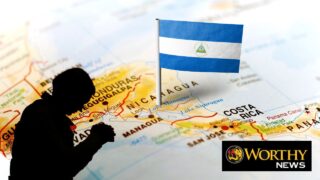
Nicaragua Ends Elections As Christians Face Growing Pressure

by Stefan J. Bos, Worthy News Chief International Correspondent
MANAGUA (Worthy News) – Outspoken Christians and other government critics are expected to face mounting pressure after Nicaragua’s long-serving President Daniel Ortega said the Central American nation will no longer hold elections, eliminating any possibility of an electoral challenge when his current term ends next year and further consolidating the power he shares with his wife, Rosario Murillo.
“There won’t be any more elections here for them to try to seize the government and seize power,” Ortega declared Sunday during celebrations marking the anniversary of the 1979 Sandinista revolution, which brought him to power after the overthrow of the U.S.-backed Anastasio Somoza dictatorship.
“The days when parties backed by the Yankees (United States) and the Somocistas would return to power are over—never again,” added Ortega, 80, making his first public appearance in two months.
His remarks formalized what critics say has effectively become a one-party state after years of dismantling democratic institutions and suppressing political opposition.
The latest move follows constitutional reforms approved last year that named Murillo as Nicaragua’s “co-president,” extended the presidential term to six years and further strengthened the couple’s grip on power.
POWER FURTHER CONSOLIDATED
Ortega, who first served as president during the 1980s before returning to office in 2007, now governs alongside Murillo while the couple exercises control over virtually every branch of government, including the armed forces and the judiciary.
Nicaragua’s 2021 presidential election was widely condemned after Ortega’s government jailed opposition candidates, detained business leaders and criminalized dissent before voters went to the polls.
The U.N. Human Rights Council has accused the Ortega-Murillo government of transforming Nicaragua “into an authoritarian state” while systematically violating human rights.
The United Nations has also cited the government’s violent response to nationwide anti-government protests in 2018, when more than 300 people were killed in a crackdown, according to international human rights investigators.
Analysts said Ortega’s latest declaration removed any remaining pretense of democratic competition.
OPPOSITION VOICES ALARM
“Ortega and Murillo are evidently afraid at the idea that the slightest political opening could create the conditions for dissent to manifest and threaten their grip on power,” said Tiziano Breda, a senior analyst with the Armed Conflict Location & Event Data project.
“Instead of staging a rigged election, they have opted to eliminate electoral competition altogether,” Breda added.
Felix Maradiaga, an opposition presidential hopeful who was imprisoned from 2021 until his expulsion to the United States in 2023, described Ortega’s remarks as “a confession of fear.”
“Ortega publicly acknowledged what has always been his true intention: to prevent his tyrannical project from being subjected to any form of democratic competition,” Maradiaga told Reuters.
Other opposition figures said Ortega had already eliminated meaningful political competition through previous elections and constitutional changes that forced many critics into exile.
CHRISTIANS UNDER PRESSURE
The deepening authoritarian rule has also coincided with what religious freedom advocates describe as an escalating crackdown on Christians.
Advocacy group Open Doors ranks Nicaragua 32nd on its 2026 World Watch List of the countries where Christians face the most severe persecution. The organization says believers who publicly criticize the government over issues including human rights violations have faced surveillance, intimidation, imprisonment and exile.
“We live in constant fear; we have no freedom,” a church leader identified only as Viviana said in comments published by Open Doors. “We knew the government was collecting information, and any statement against them could have consequences.”
According to Open Doors, the crackdown intensified after nationwide protests erupted in 2018 and worsened following the disputed 2021 elections and constitutional reforms in 2025. Churches, Christian schools and charities have had legal recognition revoked, assets seized, activities disrupted and, in some cases, banned because authorities viewed them as threats to the regime.
CHURCHES STAND FIRM
While the Roman Catholic Church has been the primary target, Protestant Christians—including Pentecostals and Baptists—have also faced increasing pressure, particularly if they refuse to demonstrate political loyalty, Open Doors says.
Despite the restrictions, many Christians continue worshipping, often in private homes after losing legal recognition.
“God has not abandoned us,” Pastor Dana said in comments published by Open Doors. “We keep meeting in homes, praying and trusting in Jesus.”
The latest developments underscore growing concern among human rights advocates that Nicaragua is becoming increasingly isolated as democratic freedoms, civil society and religious liberty continue to come under mounting pressure.
Copyright 1999-2026 Worthy News. This article was originally published on Worthy News and was reproduced with permission.
Latest News from Worthy News
Thousands of Jewish worshipers ascended the Temple Mount on Tisha B’Av, turning the solemn fast over the destruction of the biblical Temples into a striking display of renewed Jewish prayer at the contested holy site. The scenes underscored a profound shift now unfolding in Jerusalem, where mourning over the Temples’ destruction is increasingly joined by open calls for restored Jewish worship—and, among a growing number of activists, the rebuilding of the Temple itself.
Christians have expressed fresh concern over the safety of Syria’s religious minorities after an Alawite mother and her two young children were reportedly shot dead in the central city of Homs in an attack that has raised fresh fears of sectarian violence.
Christian missionaries told Worthy News Wednesday that their “pregnancy support ministry” in Jordan has helped nearly 200 pregnant refugee women and girls over the past year despite war, displacement and, in some cases, pressure to abort their unborn children.
Outspoken Christians and other government critics are expected to face mounting pressure after Nicaragua’s long-serving President Daniel Ortega said the Central American nation will no longer hold elections, eliminating any possibility of an electoral challenge when his current term ends next year and further consolidating the power he shares with his wife, Rosario Murillo.
Hungary’s Prime Minister Péter Magyar announced Thursday a sweeping anti-corruption drive targeting projects approved under the previous administration led by Viktor Orbán, saying the government had filed criminal complaints over projects worth about $3.2 billion while vowing not to increase security after being spat on by a passerby earlier this week.
President Donald Trump said Thursday he is nearing a decision on whether to launch a “massive attack” against Iran, warning that Tehran has not suffered enough pressure to abandon its attacks on international shipping and return to serious negotiations.
President Donald Trump is increasing pressure on Senate Republicans to advance legislation requiring voters to show photo identification and provide proof of citizenship when registering to vote.