Listeners:
Top listeners:
-
 play_arrow



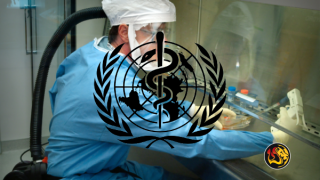
WHO Adopts Landmark Pandemic Agreement After Three Years of Negotiations

by Emmitt Barry, Worthy News Correspondent
(Worthy News) – The World Health Organization (WHO) on Tuesday formally adopted a historic Pandemic Agreement aimed at improving global readiness and response to future pandemics, following the devastating COVID-19 outbreak that claimed thousands of lives between 2020 and 2022.
After more than three years of intense negotiations, the agreement was approved by consensus during the 78th World Health Assembly in Geneva. Member states erupted into applause following the adoption, which marked only the second international legal accord negotiated under Article 19 of the WHO Constitution.
“The world is safer today thanks to the leadership, collaboration and commitment of our Member States,” said WHO Director-General Dr. Tedros Adhanom Ghebreyesus. “The agreement is a victory for public health, science and multilateral action.”
The accord outlines enhanced international coordination, faster data-sharing on emerging pathogens, improved surveillance systems, and equitable access to vaccines, treatments, and diagnostics during future pandemics. The central pillar of the agreement–the Pathogen Access and Benefit-Sharing (PABS) system–will be finalized by May 2026 and will require 60 national ratifications before entering into force.
The text emphasizes that public health decisions must be grounded in science while respecting national sovereignty. It explicitly states the WHO will not have authority to mandate domestic policies such as lockdowns, travel restrictions, or vaccination programs.
Disparities in vaccine access during the COVID-19 pandemic were a key motivator for the agreement. Angolan President Joao Lourenco, speaking on behalf of the African Union, noted, “Countries in Africa are rarely the starting point of these crises but always are on the front line.”
Not all reactions were favorable. U.S. Health Secretary Robert F. Kennedy Jr. criticized the agreement, calling the WHO “bloated” and unduly influenced by China and the pharmaceutical industry. “We’ve already been in contact with like-minded countries and we encourage others to consider joining us,” he said.
“The WHO has failed us,” Kennedy said. “It mishandled the COVID-19 pandemic, suppressed early treatment options, and blindly promoted experimental vaccines without transparency. Now it wants a bigger role in deciding how we respond next time? That’s not reform — it’s consolidation of control.”
Kennedy also condemned the PABS system as a “pipeline for profiteering,” arguing it creates an illusion of equity while guaranteeing market access for pharmaceutical giants. “This isn’t about global health — it’s about global control,” he added. “We are urging other sovereign nations to reconsider their support for this agreement.”
Critics from civil liberties organizations have also voiced concerns that the agreement could open the door to overreach during emergencies, citing vague language that could be interpreted to justify sweeping health mandates or restrictions in the future. Some argued that while the accord affirms national sovereignty, the pressure to conform to international standards during crises could lead to backdoor compliance.
Additionally, several developing countries voiced frustration that the agreement fell short of mandating technology transfers and instead only encouraged them on “mutually agreed terms.” Activists warn this could leave low-income nations once again dependent on the goodwill of wealthier states in the next crisis.
Still, the agreement was widely praised by other leaders. French President Emmanuel Macron called it “a victory for the future,” while Indian Prime Minister Narendra Modi described it as “a shared commitment to fight future pandemics.”
With implementation now underway, the WHO and its member states will begin developing the systems and structures–like the Global Supply Chain and Logistics Network and Coordinating Financial Mechanism–to ensure the world is not caught off guard again.
Copyright 1999-2026 Worthy News. This article was originally published on Worthy News and was reproduced with permission.
Latest News from Worthy News

Israel and Iran-backed Hezbollah have agreed to a ceasefire that was to begin Friday afternoon, Worthy News learned.

At least 10 people, including four children, were injured in a Russian strike on Ukraine’s northeastern Kharkiv region, Ukrainian authorities said Friday. In southern Ukraine, the State Emergency Service reported that one person was killed and four others were injured in a separate Russian attack on the Odesa region.
President Donald Trump signed the temporary peace deal with Iran ahead of schedule Wednesday at the Palace of Versailles in France, kicking off negotiations over a final nuclear deal.
Iran’s Supreme Leader Mojtaba Khamenei’s statement following the signing of a memorandum of understanding with the United States is being viewed by analysts not as an embrace of peace, but as a carefully crafted declaration that preserves Tehran’s revolutionary posture while allowing the regime to regroup.

The United States imposed new sanctions Thursday on individuals and entities linked to Hezbollah, accusing them of using political and financial influence to obstruct Lebanon’s peace process and delay the Iran-backed group’s disarmament.
Ukraine launched one of its largest drone attacks on Moscow since the war began, hitting a key oil refinery and other targets around the Russian capital, leaving at least one person dead and numerous others injured, Russian officials said.
Russian President Vladimir Putin hosted Southeast Asian leaders in Kazan this week as Moscow moved to deepen ties with the Association of Southeast Asian Nations and promote its vision of a “multipolar world order” aimed at countering U.S. global dominance.