Listeners:
Top listeners:
-
 play_arrow



Saudi Nuclear Agreement Could Open Door To 20% Uranium Enrichmen

by Emmitt Barry, Worthy News Washington D.C. Bureau Chief
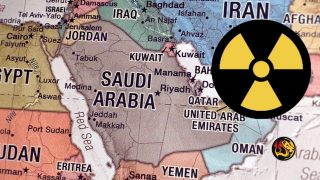
WASHINGTON/JEDDAH (Worthy News) – A new U.S.-Saudi civilian nuclear agreement could eventually give Riyadh a pathway to enrich uranium up to 20%, raising fresh concerns in Washington over nuclear proliferation in the Middle East, according to a Wall Street Journal exclusive.
The agreement, backed by the Trump administration, would establish a civilian nuclear program in Saudi Arabia and allow a two-year joint study on uranium enrichment. During that study period, enrichment would be barred, but the arrangement reportedly leaves open the possibility that Washington and Riyadh could later agree to enrichment on Saudi soil.
That provision has alarmed critics because 20% enrichment is far above the level typically used in conventional civilian power reactors and is considered a significant technical step closer to weapons-grade material. Supporters argue that enriched fuel could be used for some advanced or small modular reactors, but proliferation experts and lawmakers warn the precedent could reshape the nuclear balance in a region already shaken by Iran’s nuclear ambitions.
The deal also comes as Iran remains under growing international scrutiny. Reuters reported Friday that the United States, Britain, France and Germany are pressing the International Atomic Energy Agency’s board to refer Iran to the U.N. Security Council, citing Tehran’s lack of cooperation and concerns over enriched uranium stocks.
Saudi Arabia has long said its nuclear ambitions are peaceful, aimed at energy diversification and technological development. But Crown Prince Mohammed bin Salman has previously warned that if Iran obtains a nuclear weapon, Saudi Arabia would seek one as well — a statement that continues to shadow any nuclear agreement involving the kingdom.
According to the Journal, some lawmakers are pressing for greater transparency, including access to classified documents tied to the accord. Critics say Congress may have limited power to stop future enrichment once the agreement’s framework is in place, while the White House argues the deal includes safeguards and was handled under the Atomic Energy Act.
For Washington, the agreement carries major strategic weight. It could deepen U.S.-Saudi ties, open lucrative opportunities for American nuclear firms, and keep Riyadh from turning to China or Russia for nuclear technology. But it also forces a difficult question: whether strengthening a key Arab partner is worth the risk of normalizing uranium enrichment in one of the world’s most volatile regions.
The issue now moves from diplomacy into oversight, where Congress will have to decide whether the agreement strengthens American influence — or plants the seeds for the next nuclear race in the Middle East.
Worthy News Analysis
The hesitancy in Washington is rooted not only in Saudi Arabia’s stated ambitions, but in the hard lessons of nuclear history. Pakistan became the first Islamic-majority nation to obtain nuclear weapons despite years of outside concern, intelligence gaps, and diplomatic pressure. Its program, built over decades and aided by clandestine procurement networks, demonstrated that determined nations can move quietly, exploit global blind spots, and cross the nuclear threshold before the world fully grasps the consequences.
Pakistan’s rise as a nuclear power showed that once an Islamic nation obtains the bomb, the strategic balance of an entire region changes overnight. In the Middle East, where Iran’s nuclear ambitions have already unsettled allies and adversaries alike, even a civilian enrichment pathway for Saudi Arabia raises a deeper concern: today’s energy program could become tomorrow’s deterrent.
That does not mean Riyadh is pursuing a weapon, and Saudi officials continue to present their nuclear plans as peaceful. But history has made policymakers cautious. The Pakistani precedent remains a reminder that nuclear capability, once gained, is almost impossible to reverse — and in a region defined by rivalry, ideology, and fragile trust, the margin for miscalculation is dangerously thin.
Copyright 1999-2026 Worthy News. This article was originally published on Worthy News and was reproduced with permission.
Latest News from Worthy News
President Donald Trump warned Friday that the United States may soon strike Iran’s Pickaxe Mountain, a deeply fortified underground site near the Natanz uranium enrichment complex, as tensions over Tehran’s nuclear program continue to sharpen.

The United States, Britain, France, and Germany are pressing the International Atomic Energy Agency’s Board of Governors to report Iran to the U.N. Security Council, accusing Tehran of violating its nuclear obligations and refusing to fully account for its enriched uranium stockpile.
Israeli Prime Minister Benjamin Netanyahu declared that removing Iran’s ruling regime has become Israel’s “central mission,” telling senior military officials that the goal is now “within reach” as Tehran faces mounting pressure from Israel, the United States, and regional fallout from its terror network.

A new U.S.-Saudi civilian nuclear agreement could eventually give Riyadh a pathway to enrich uranium up to 20%, raising fresh concerns in Washington over nuclear proliferation in the Middle East, according to a Wall Street Journal exclusive.

The Israel Defense Forces said Thursday it had completed clearing a strategic Hezbollah underground facility beneath the Ali Taher Ridge in southern Lebanon and was preparing the tunnel complex for demolition.

Syria has begun destroying chemical weapons materials left behind by the Assad regime, marking the first known destruction process of its kind in the country in roughly a decade, officials told the U.N. Security Council on Thursday.

U.S. lawmakers are raising fresh concerns that China, Russia and other American adversaries could use electromagnetic pulse weapons to cripple the nation’s electrical grid and critical infrastructure, potentially plunging large portions of the country into darkness.